Strategic planning, cities, environment, green spaces, mobility, pollution, green infrastructure, URBACT

Imagina Badia: The revision of the Badia del Vallès urban model (under the URBACT project sub>urban)
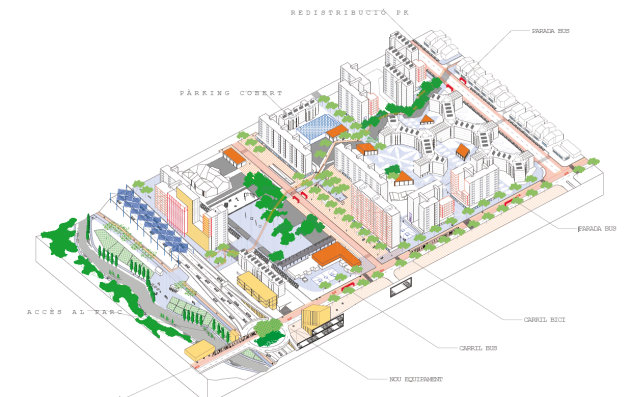
Study for urban model revision: Improving integration and resilience in peripheral mass housing estates
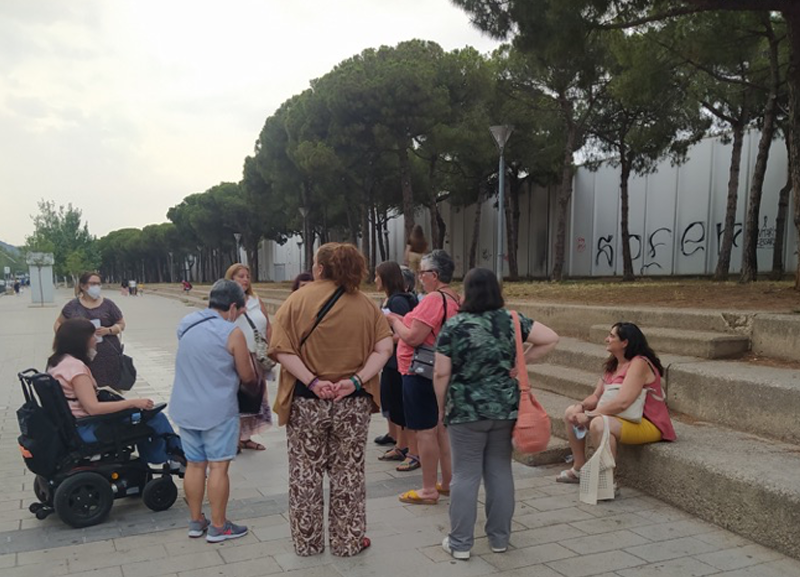
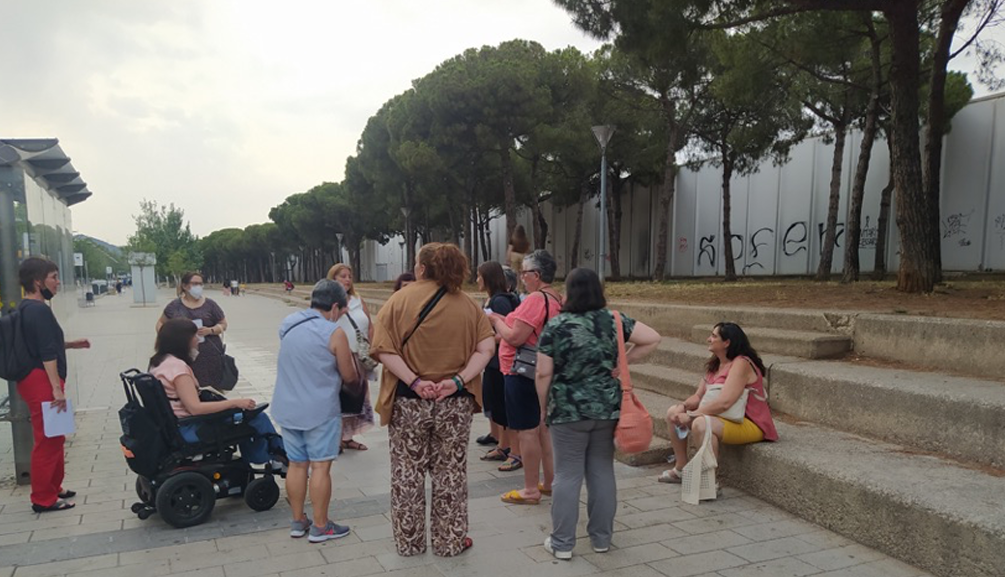
Badia del Vallès is a mass housing estate built in the 1970s. Its citizens, with the Barcelona Metropolitan Area (ES) authority and the municipality, jointly drew up an Integrated Action Plan for the city, under the URBACT project sub>urban.
The Imagina Badia study for the revision of the Badia del Vallès urban model includes a catalogue of actions aimed at three strategic areas, making the city more connected, healthy and inclusive.
Challenges addressed
Badia del Vallès is a mass housing estate built in the 1970s. Its citizens, with the Barcelona Metropolitan Area (ES) authority and the municipality, jointly drew up an Integrated Action Plan for the city, under the URBACT project sub>urban.
Badia del Vallès is a paradigmatic case since its problems of physical integration have kept it isolated from its surroundings and have led the city to a kind of stagnation of its urban functions, which have been greatly reduced to residential ones. However, its proximity to large metropolitan centralities, but at the same time its disconnection, puts Badia in a privileged position for the future.
The main challenges that Badia is facing are:
- Spatial and mental isolation. Low permeability
- Mono-functional and mono-typological land and buildings
- Too rigid housing tenure. Rough liberalisation in 2023
- Un(-der) used open spaces, buildings and resources
- Ageing and decreasing population
- Unsustainability of the municipality public funds
- Large externalities from mobility infrastructure
- Poor reputation from the outside
- Petrification of social and economic problems
This practice is transferable to similar neighbourhoods in other EU cities.
Main objectives
This plan, known as Imagina Badia, established three objectives:
- Reconnect the city, breaking its spatial and mental isolation
- Create a healthier city, reducing pollution and enhancing high-quality public spaces and adaptable facilities
- Achieve a more inclusive city in terms of housing, economic promotion and peaceful community relations
The vision that emerged from the Imagina Badia process to jointly draw up the IAP (Integrated Action Plan) for Badia del Vallès is to reach a more connected, healthy and inclusive town. This vision is the outcome of a shared diagnosis at the local level spearheaded by the central debate group (GDC) made up of citizens and staff from the Town Council and the AMB, which compiled the contributions from the expanded group (municipal government, political parties with representation in Badia) and citizens, collected through an open session and the website.
Facts
Project type Urban Model Revision
Partners Badia del Vallès City Council, Barcelona Metropolian Area, Imagina Badia
Dates 2017-2024
Funding Funded by URBACT / Sub>Urban project. Recovery, Transformation and Resilience Plan – Funded by the European Union – NextGenerationEU (total: €7,000,000)
Project description
The Imagina Badia study for the revision of the Badia del Vallès urban model includes a catalogue of actions aimed at three strategic areas, making the city more connected, healthy and inclusive.
These actions are designed to be used by the municipality in line with opportunities available at any given moment, guaranteeing their adaptability and adjustment to current needs. Here are some examples:
- Connectivity and relationship with the region: improving public transport, accessibility and supra-municipal connectivity.
- Mobility structure: developing a hierarchy in the road system to enhance city navigability and reduce occupancy of public space by private vehicles.
- Intensifying and planning the use of public space: moving towards intensification and rationalisation, and creating public areas that can adapt to changing needs. This can be achieved by intensifying relationships between built space and empty space in order to create a new collective space.
- Showcasing cultural and natural heritage and social assets, and optimising natural resources.
- Diversifying and intensifying building use and density: introducing new uses and typologies that generate a truly complex city and offer new opportunities. For example, one way to enhance the human scale is by adding elements to ‘break up’ façades. This helps generate filters that accompany citizens on their daily journeys, promoting more carefully defined and safer spaces.
Following the identification of the principal issues confronting the municipality, through a participatory process, efforts were made to consolidate proposed actions into three strategic areas, integrating all the challenges. The challenges identified reflect the problems commonly associated with this type of residential structure, where the combination of morphology and localisation leads to social and economic issues.
Impact and results
After accommodating an influx of internal immigrants, many mass housing areas are now home to new waves of immigrants from abroad. The revision of such neighbourhoods, which exist in many European cities, is particularly urgent, especially for those built in the mid-twentieth century.
This is because sustainable growth involves recycling the existing city, protecting open spaces, and strengthening a transport-oriented development.
The context of climate change is also a factor. The buildings in these neighbourhoods have low energy efficiency ratings. Renovating them will contribute to achieving net zero emissions by 2050.
Finally, focusing on mass housing areas to improve the living conditions of vulnerable citizens will have a major impact on urban social cohesion and equality.
These goals demand clear visions and flexible and adaptable tools. This project provides just that. It represents a strategic approach that establishes a working system and lays the foundations for an adaptable intervention within the built urban context. To ensure its successful implementation, mechanisms and instruments must be adapted to the local policy framework.
The catalogue provides strategies and actions designed to address common urban situations, after adjustment to the particular circumstances of each site.
Cities adopting this practice will require the political will to initiate a complex but very enriching process involving a multiscale approach. Once neighbourhoods with similar characteristics have been identified and their social, morphological and economic characteristics analysed, it is vital to initiate a participatory process to pinpoint particular identity issues in the specific cultural context.
The practice has been shared widely, including among students in Land Architecture and urban regeneration at the University of Illinois Urbana-Champaign and Barcelona Tech University UPC. It also featured at the 4th Congress of the Hispanic Network of Urban Morphology (ISUF-H) in 2020.
Publications & main documents
Full facsheet (URBACT website)
Barcelona Metropolitan Area social media prize dissemination
Barcelona Metropolitan Area news item (in Catalan)
Badia del Vallès official website with all related information news (in Catalan)
Presentation Video of the Imagina Badia project (in Catalan)
PUBLICATIONS AND MAIN DOCUMENTS
Full facsheet (URBACT website)
Barcelona Metropolitan Area social media prize dissemination
Barcelona Metropolitan Area news item (in Catalan)
Badia del Vallès official website with all related information news (in Catalan)
Presentation Video of the Imagina Badia project (in Catalan)