CITY STRATEGY AND GOVERNANCE, MOBILITY, DATA, AND ICT, TOURISM


Digital-by-default payments and smart city infrastructure in Pafos
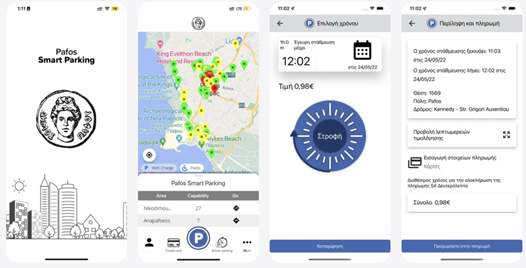


Pafos is a medium-sized coastal municipality that has used digitalisation to simplify everyday interactions with city hall while building core smart-city infrastructure. Since 2022, the municipality has moved municipal billing fully online and complemented this with a one-stop complaints form, a Citizens Service Centre for assisted access and a growing portfolio of smart-city projects under a unified vision.
These include a large-scale LED and smart-lighting programme, the deployment of smart poles and a municipal LoRaWAN network, a consolidated data centre and a smart-parking system linked to a dedicated app. Together, these elements position Pafos as an example of how a relatively small Mediterranean city can push toward digital-by-default services while keeping inclusion and infrastructure modernisation in view.
Challenges addressed
Before the reforms, many municipal procedures in Pafos still relied on in-person visits or paper bills, which created inconvenience for residents and administrative overhead for the municipality. Payments for water, local taxes and fees were handled through counters or over-the-counter banking channels, and there was no unified digital front door for complaints and requests.
At the same time, the city sought to upgrade its basic infrastructure – street lighting, connectivity and parking – to cope with tourism pressure and congestion while keeping operating costs under control. Fragmented systems and the absence of a common communication network for sensors risked leading to a patchwork of stand-alone solutions rather than a coherent smart-city.
Main objectives
The main objective was to modernise the relationship between citizens and the municipality by making high-frequency interactions – especially payments and complaints – primarily digital, while maintaining assisted options. In parallel, Pafos wanted to build a foundational smart-city layer made up of LED and smart lighting, smart poles, a LoRaWAN network and a central data centre that could host current and future applications.
A further objective was to use one of the most visible pain points, parking, as a demonstration of how sensor-based systems and mobile apps can provide concrete benefits in terms of time saved, reduced circulation and better access to information, including for people with disabilities. g.
External resources
Facts
Project type Digital-by-default municipal payments and complaints (online billing, e-billing, web complaints form and Citizens Service Centre), combined with a smart-city programme that covers smart LED street lights, smart poles with Wi-Fi and environmental sensors, a private LoRaWAN network, a municipal data centre and an intelligent parking system with a dedicated mobile app.
Partners The initiatives are led by the Municipality of Pafos. For payments, the city works with the national JCCsmart platform, which processes municipal bills online, along with local banks for standing orders. Smart parking is delivered in partnership with technology providers that supply underground sensors and the Pafos Smart Parking app for Android and iOS, promoted through the municipal website and communication channels. Smart lighting, poles and LoRaWAN are implemented with specialised vendors under the municipality’s smart-city programme.
Funding Digital payments and e-billing rely mainly on municipal operating budgets and national digital-government infrastructure already in place (JCCsmart). Smart lighting, smart poles, LoRaWAN and the municipality’s data centre are financed as part of Pafos’s smart-city investment package, which is designed to pay back over time through energy and maintenance savings; official communications emphasise expected annual savings of around half a million euros from LED and smart lighting alone.
Project description
From 1 September 2022, Pafos required that all municipal bills – including water, local taxes and other fees – be paid electronically or by standing order. Residents and businesses can now settle bills through the municipal website, the national JCCsmart gateway or bank transfers, and from January 2023 municipal bills began to be issued electronically through the “Pay Online” page, replacing paper mailings.
Alongside payments, the municipality offers a one-stop complaints and requests form on its website that routes issues to the appropriate department, while a physical Citizens Service Centre provides face-to-face support for those who cannot or do not wish to transact online and forwards applications into the same back-office workflows.
In parallel, Pafos has launched a suite of smart-city projects. The city is replacing and installing around 7,000 LED “Smart Lights” and 55 smart poles, with central software to dim or brighten lamps based on time and traffic, which is expected to cut energy use and save roughly half a million euros per year. A dedicated municipal LoRaWAN network carries data from these and other sensors, and a municipal data centre provides secure hosting, backup and fibre-connected infrastructure for digital services.
One of the most visible applications is Pafos Smart Parking: underground sensors detect free spaces in on-street zones and car parks; the mobile app shows real-time availability on a map, guides users to a free space, and allows them to pay digitally for the effective parking time using cards or e-wallets, with options for subscriptions and accessible bays for people with disabilities.
Impact and results
The shift to online payments has simplified interactions with the municipality and reduced counter traffic. National and local media note that, from September 2022, bills are settled only electronically or by bank transfer, which both accelerates revenue collection and nudges residents toward digital channels. The one-stop complaints form and Citizens Service Centre provide a clearer, more traceable route for problem reporting and support, aligning with broader efforts in Cyprus to expand basic e-government uptake.
On the infrastructure side, the smart-lighting and smart-pole project is expected to halve street-lighting energy consumption and deliver significant budget savings, while improving control over lighting levels in different areas. The smart parking system has reduced time spent searching for spaces, cut unnecessary circulation and associated emissions, and, made it easier for drivers with disabilities to locate and reach reserved bays thanks to dedicated mapping and routing functions.
Publications & main documents
RELATED CONTENT
Sorry, no posts matched your criteria.