
Missions València 2030: a mission-oriented strategy to drive urban innovation through Public Procurement of Innovation
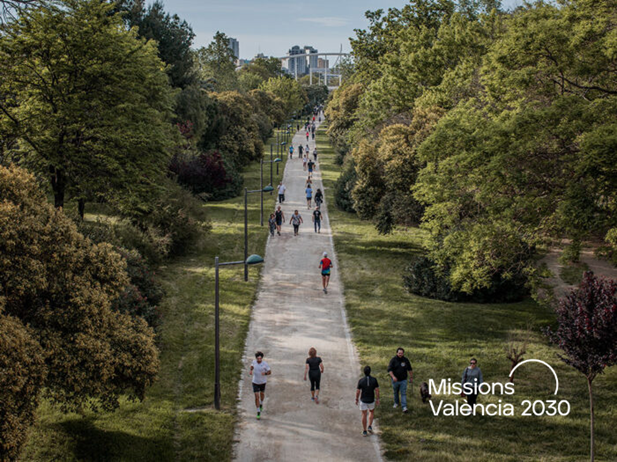
Missions València 2030 is the City of València’s pioneering strategy to transform urban development through a mission-oriented policy approach, placing public innovation at the core of the city’s agenda. Inspired by the European mission-based framework promoted by Mariana Mazzucato, the strategy addresses major urban challenges through collaborative processes, citizen engagement, and strategic use of Public Procurement of Innovation (PPI) to accelerate high-impact solutions.
The initiative has positioned València as one of Europe’s leading cities in urban innovation, serving as a benchmark for governance reform, cross-departmental collaboration, and ecosystem activation.
Challenges addressed
- The need for sustainable urban transformation in response to climate change, pollution, and pressure on urban resources.
- Lack of mechanisms to align ecosystem-driven innovation with municipal strategic priorities.
- Limited scalability of innovative solutions due to traditional administrative and procurement procedures.
- Growing demand for citizen participation in the design of urban policies.
- The challenge of fostering transversal, collaborative work across municipal departments to address complex, systemic challenges.
Main objectives
- Establish an innovative governance model based on missions, with measurable objectives aligned with EU priorities.
- Activate Public Procurement of Innovation (PPI) as a strategic instrument to attract high-impact solutions.
- Increase the participation of citizens, companies, universities, and technology centres in urban problem-solving.
- Promote innovative projects capable of delivering significant impacts in sustainability, health, social cohesion, and digital transformation.
- Position València as an open urban laboratory for experimentation, testing, and validation of new technologies and models.
External resources
Facts
Project type :
City-wide mission-oriented strategy combining strategic planning, pilot projects, social innovation, Public Procurement of Innovation, and experimental public policies.
Partners:
- City of València, leading the overall strategic framework.
- Fundación InnDEA / Las Naves, acting as the operational engine for urban innovation.
- Collaboration with the local innovation ecosystem, including startups, companies, technology centres, and universities (University of València, Polytechnic University of València).
- International cooperation within the framework of the EU Mission “100 Climate-Neutral and Smart Cities by 2030.”
- Active citizen involvement through co-creation processes and open participation mechanisms.
Funding :
- Consolidated municipal budget allocated to innovation and PPI activities.
- Co-financing of specific initiatives through public–private collaboration.
- European funds related to smart and sustainable cities expected.
Project description
Missions València 2030 provides a strategic framework built around six urban missions addressing sustainability, mobility, urban health, good governance, and digital transformation, with clearly defined and measurable targets for 2030. The strategy applies a mission-oriented approach to align all municipal innovation instruments — including Public Procurement of Innovation — with major urban challenges.
The project deploys participatory processes to identify challenges, prioritise them, and translate them into innovation challenges activated through PPI instruments (market consultations, competitive dialogues, PCP/PPI procedures).
Through Las Naves, València operates as an urban laboratory where innovative solutions are tested and validated in real-life public spaces.
The strategy is structured around three core pillars:
- Mission definition, aligned with European goals and supported by urban data.
- Collaborative governance, with cross-departmental working groups and strong citizen engagement.
- Innovation instruments, including PPI, living labs, open innovation challenges, and acceleration programmes.
This approach has enabled València to embed innovation into its administrative culture, fostering strong alliances between public authorities, businesses, research institutions, and citizens.
The Department of Contracts led the procurement on behalf of FMS, while strong leadership from the Ministry of Finance ensured political backing and cross-institutional coordination.
This governance structure was critical in managing the complexity and novelty of the procedure.
Impact and results
- València was selected as one of the 100 European cities committed to achieving climate neutrality by 2030, directly reflecting the effectiveness of its mission-oriented strategy.
- Significant increase in the use of Public Procurement of Innovation, with innovation challenges launched in areas such as urban health, sustainable mobility, energy efficiency, and citizen well-being.
- Strengthening of the local urban innovation ecosystem, with enhanced public–private collaboration and new opportunities for startups and innovative SMEs.
- Internal transformation of municipal processes through innovative methodologies, co-creation, and transversal working practices.
- Strong international recognition through participation in EU Missions, awards for urban innovation, and involvement in European city networks.
- Deployment of urban pilots with tangible impacts on air quality, sustainable mobility, emissions reduction, social inclusion, and digitalisation.
- Increased visibility of València as a reference city for public innovation and urban experimentation.
Publications & main documents
RELATED CONTENT
Sorry, no posts matched your criteria.


