Tags: Gender | Income-Generating Activities (IGA) | Gender-Responsive Waste Sorting | Geographic Information Systems (GIS) | Inclusive Urban Planning | Capacity Building | Microprojects | Chefchaouen | Mohammedia | Taroudant | Morocco | “City-to-City Cooperation Maghreb-Germany” (KWT) | GIZ | Promoting Women’s Roles in the Maghreb (PFM)
Gender Approach in Local Urban Development Projects in Morocco
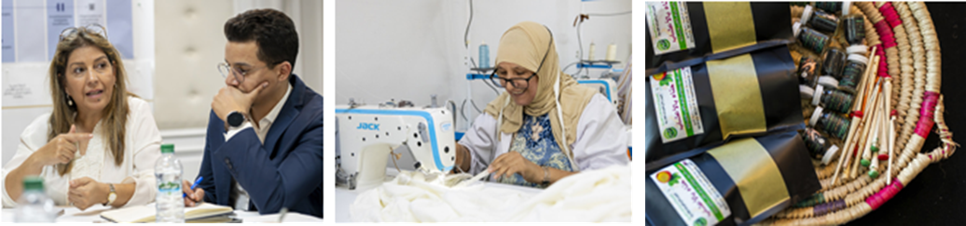
In Morocco, the regional project “City-to-City Cooperation Maghreb-Germany” (KWT I and II) provided a training program, funded through the regional “Promoting the Role of Women in the Maghreb” (PFM) Fund, for elected women and municipal officials from the municipalities of Chefchaouen, Mohammedia and Taroudant.
In 2019, the program resulted in three micro-projects led by the participants, each addressing a specific form of inequality: the economic vulnerability of women’s cooperatives and associations in Taroudant, through support for income-generating activities (IGAs); the burden placed on women by household waste sorting in Mohammedia, through a gender-responsive selective waste-sorting campaign; and the under-representation of women in technical services in Chefchaouen, through the integration of two female municipal officials into the public lighting department.
In 2019, this program resulted in three microprojects led by the participants, each addressing a specific inequality: the economic vulnerability of women’s cooperatives and associations in Taroudant (support for income-generating activities, IGAs), the burden of household waste sorting borne by women in Mohammedia (gender-responsive selective waste-sorting campaign); and the under-representation of women in technical departments in Chefchaouen (integration of two female municipal officials into the public lighting department).
Tags: Cases, EVIMACC, Gender approach, Gender equality,IGA, Gender-responsive waste sorting, GIS, Capacity building, Microprojects, Chefchaouen, Mohammedia, Taroudant, Morocco , KWT
Challenges addressed
- Implementation period limited to a maximum of 5-6 months per microproject due to the contractual constraints of the PFM Fund
- Significant delays for obtaining administrative authorizations
- Limited financial capacity of cooperatives and associations in Taroudant, restricting the scope for meaningful action
- Competition from imported products and informal markets, reducing the prospects for successful income-generating activities (IGAs)
- Concerns among beneficiaries about integrating a predominantly male professional environment
- Difficulty involving men in efforts to overcome resistance in more conservative communities in Taroudant
Main objectives
- Strengthen the managerial and technical skills of elected women and female municipal officials
- Equip elected women and female municipal officials with the tools to lead micro-projects that open up women’s access to economic resources, services and technical positions within municipalities
- Professionalize the activities of associations and cooperatives in Taroudant by leveraging local heritage
- Promote a more equitable sharing of household waste management responsibilities between women and men in Mohammedia
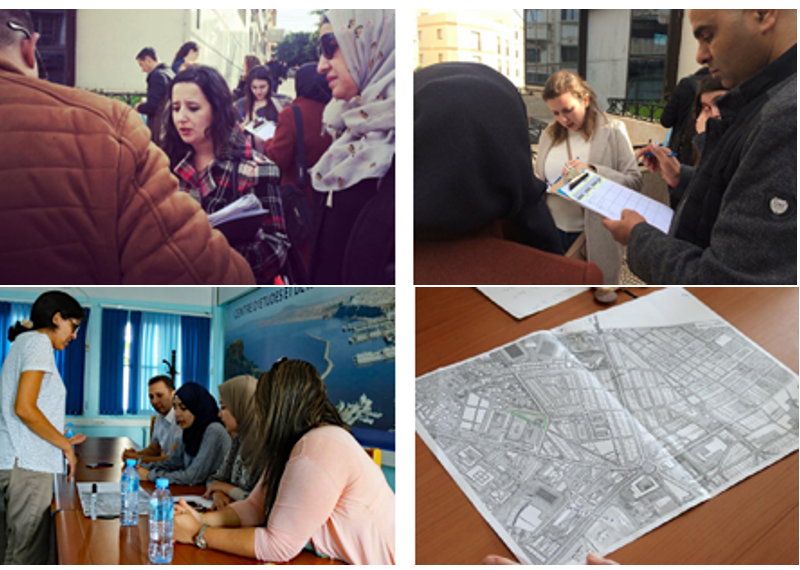
- Integrate two female municipal officials into the public lighting department in Chefchaouen and strengthen their capacities in geographic information systems (GIS)
- Systematically mainstream gender into municipal policies and actions
Facts
Project type
Capacity-building measures and gender-focused microprojects in urban areas
Partnership
Municipalities of Chefchaouen, Mohammedia, and Taroudant (Morocco) | Deutsche Gesellschaft für Internationale Zusammenarbeit (GIZ) – KWT I and II Regional Project | General Directorate of Local Authorities (DGCT), Ministry of the Interior (Morocco) |
Engagement Global gGmbH / Service Agency Communities in One World (SKEW) | PFM Regional Fund (2013-2020)
Funding
German Federal Ministry for Economic Cooperation and Development (BMZ) | PFM Regional Fund
Start Date
KWT I: March 2016 – February 2020 (training and PFM microprojects)
KWT II: March 2020 – February 2024 (sustainability and scaling up)
Location
Chefchaouen region (Tangier–Tetouan–Al Hoceima), Mohammedia (Casablanca-Settat region), and Taroudant (Souss-Massa region), Morocco
Scaling Up
Follow-up regional project “Urban Adaptation to Climate Change in the Maghreb” (March 2024 – February 2027)
Project description
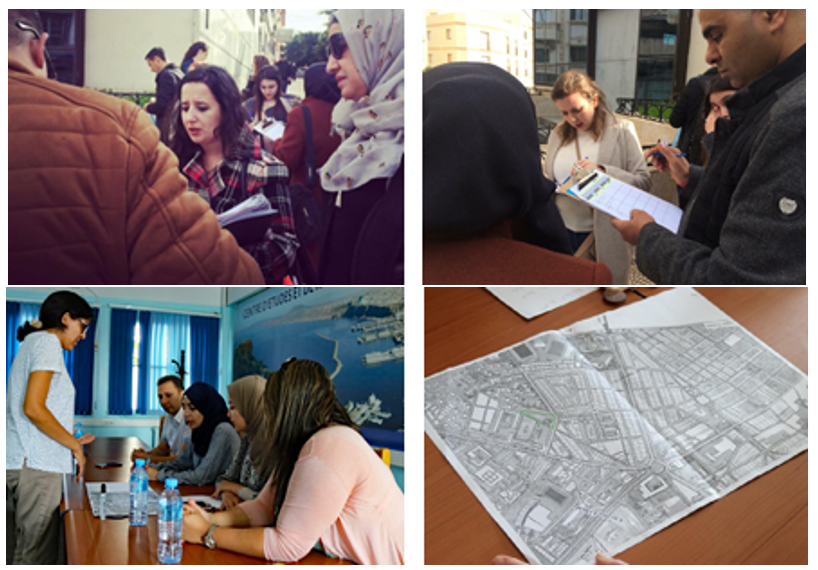
The gender-related measures were implemented in two phases. The first focused on strengthening participants’ soft skills, through training in management and leadership skills and project presentation techniques (92% satisfaction rate). The second phase focused on hard skills, through the seminars “Gender Approach and Urban Space” and “Inclusive Urban Planning,” which achieved a 100% satisfaction rate. Following a call for project proposals, three micro-projects were selected in the three Moroccan municipalities.
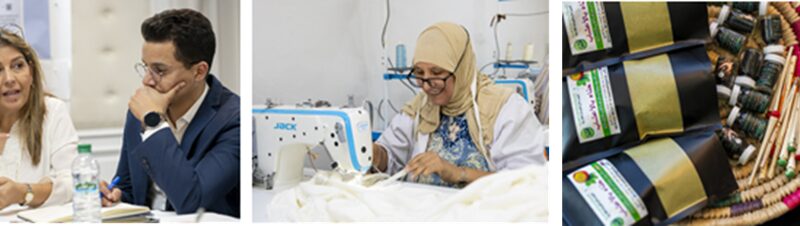
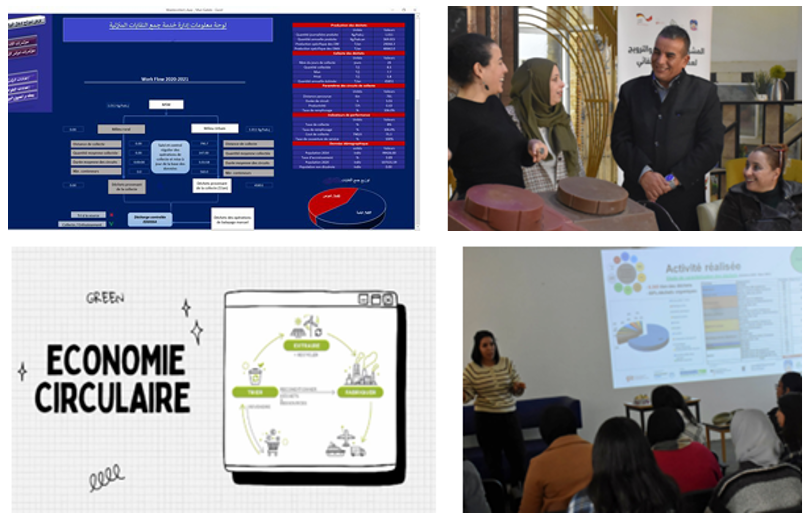
In Taroudant, a support program for income-generating activities (IGAs) was delivered to 25 representatives of associations and cooperatives. It included a needs assessment, training sessions (fund management, marketing, sales and local products), as well as individualized coaching.
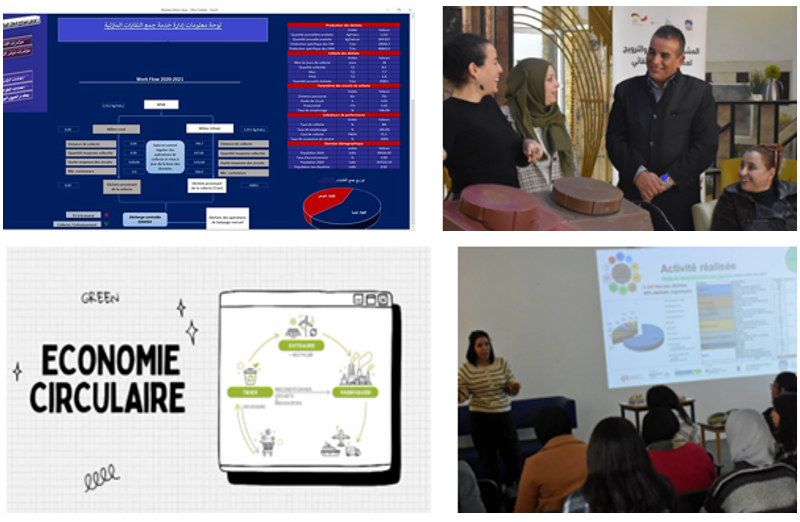
In Mohammedia, a gender-responsive awareness-raising campaign on selective waste sorting was carried out with 40 trained ambassadors and inclusive communication materials have been created. In Chefchaouen, two female municipal officials were integrated into the public lighting department: needs assessment, formalization of the department, GIS training sessions and support during their transition into their new roles.
All these measures were implemented with a view to promoting balanced development between women and men, involving both male and female waste-sorting ambassadors, building on Taroudant’s local heritage, and supporting women’s professional integration into traditionally male-dominated occupations. The participants’ continued commitment was a key factor in ensuring the sustainability of the micro-projects.
Impact and results
Results Achieved
- Strengthened management capacities and implementation of three gender-focused micro-projects led by female municipal officials
- Six training sessions delivered to 25 representatives of associations and cooperatives in Taroudant, including communication plans and skills-sharing arrangements
- 40 ambassadors for gender-responsive selective waste sorting trained in Mohammedia, 284 households reached through awareness-raising activities, and inclusive communication materials developed
- Job descriptions validated, GIS training provided, and support provided for the integration of two female municipal officials in Chefchaouen
- Collective awareness of the difficulties faced by women in municipal decision-making processes
- Preparations made for scaling up the gender-responsive selective waste-sorting initiative in other neighbourhoods and municipalities
Lessons Learned
- Integrate a gender approach into urban projects: understanding and applying it contributes to greater inclusion and sustainability
- Adopt a practical, hands-on approach (“learning by doing”) in training to ensure that participants effectively take ownership of the tools
- Involve both men and women in awareness-raising activities (male and female ambassadors) to challenge traditional gender roles
- Adopt a dual gender approach: a specific approach to promote equality, and an integrated approach to systematically mainstream the gender dimension across all municipal policies