Cases, EVIMACC, Gender approach, Inclusive urban planning, Exploratory walk, Microprojects, Capacity building, Citizen participation, Annaba, Oran, Tlemcen, Algeria, KWT
Gender Approach in Local Urban Development Projects in Algeria
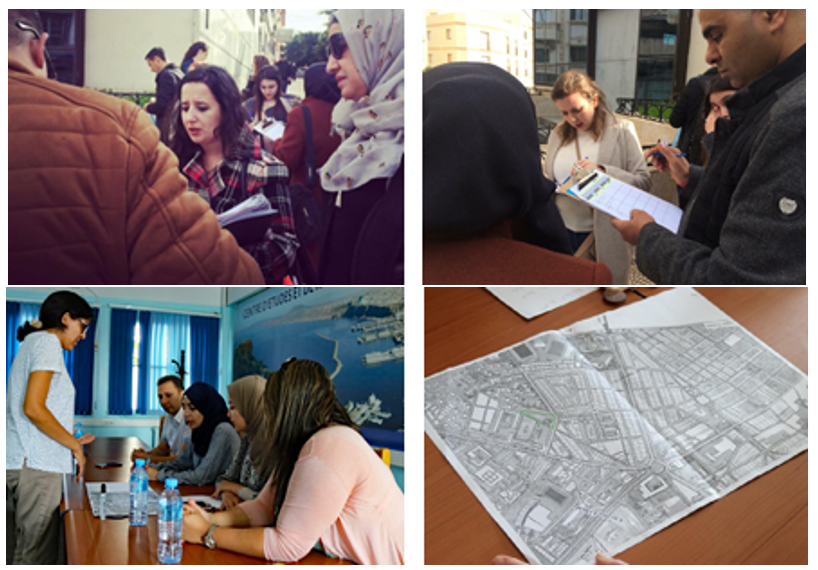
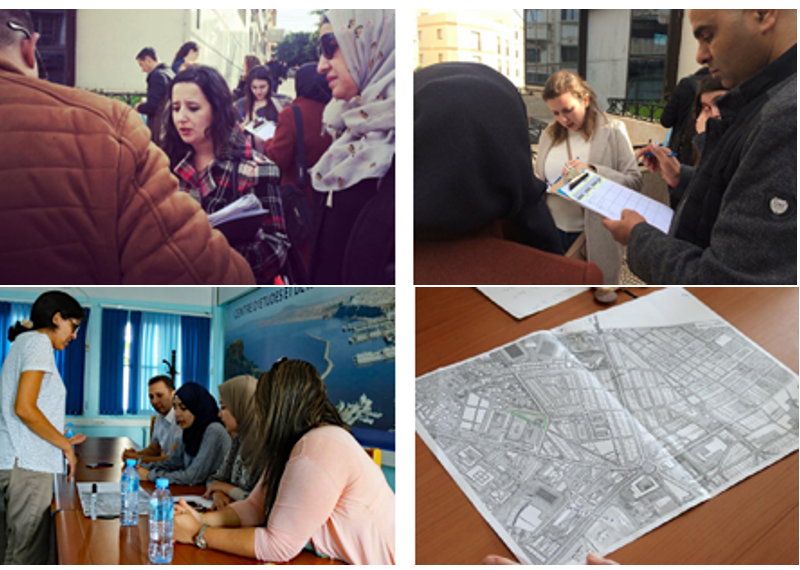
As part of the “City-to-City Cooperation Maghreb-Germany” regional Project (KWT I and II), four Algerian municipalities – Annaba, Mostaganem, Oran and Tlemcen – benefited from a capacity-building program for elected women and female municipal staff, funded through the regional Fund “Promoting the Role of Women in the Maghreb” (PFM). The women who participated in the training subsequently responded to a “Gender in Urban Planning” call for project proposals launched in 2019. As a result, three micro-projects were selected: the development of an inclusive public space in Haï Zitoune (Oran); the establishment in Annaba of a physical and virtual tourist information point “Point i23,” incorporating a gender dimension into a tourism geographic information system (GIS); and the creation of a Citizen Space in Tlemcen. Algeria used the exploratory walk methodology for the first time as part of this initiative.
Tags: EVIMACC, Gender approach, Inclusive urban planning, Exploratory walk, Microprojects , Capacity building , Citizen participation, Annaba, Oran, Tlemcen, Algeria, KWT
Challenges addressed
- Tight implementation timeframe: 5 to 6 months per micro-project, as stipulated by the contractual framework of the PFM Fund and the duration of KWT I
- Significant delays in obtaining administrative permits
- Concerns among beneficiaries about their ability to excel in a predominantly male professional environment
- Difficulty mobilizing participants for the exploratory walk and coordinating their availability
- Lack of a tourism database and difficulty raising funds to establish the Point i23 in Annaba
- Difficulty raising awareness and changing citizens’ behavior despite limited experience from previous initiatives
Main objectives
- Strengthen the managerial and technical skills of elected women and female municipal officials
- Integrate a gender approach into local governance and urban development projects
- Democratize access to public spaces for women and persons with reduced mobility
- Raise awareness of the barriers faced by women in urban spaces and in decision-making processes
- Implement pilot micro-projects integrating a gender approach, led by female municipal officials
Facts
Project type
Capacity-building measures and gender-focused microprojects in urban settings
Partnership
Municipalities of Annaba, Mostaganem, Oran, and Tlemcen (Algeria) – GIZ – KWT I and II Regional Project – National Urban Planning Agency (ANURB)
– Engagement Global gGmbH / SKEW – PFM Regional Fund (Promoting the Role of Women in the Maghreb, 2013-2020) – City of Sindelfingen (Germany, for Point i23 in Annaba)
Funding
German Federal Ministry for Economic Cooperation and Development (BMZ) – PFM Regional Fund
Start Date
KWT I: March 2016 – February 2020 (PFM training and microprojects)
KWT II: March 2020 – February 2024 (sustainability and scaling up)
Location
Annaba, Mostaganem, Oran (Haï Zitoune), and Tlemcen, Algeria
Scaling Up Follow-up regional project “Urban Adaptation to Climate Change in the Maghreb” (March 2024 – February 2027)
Project description
The regional PFM training program, jointly implemented for Algerian and Moroccan municipalities, first strengthened participants’ soft skills (management, leadership and project presentation), achieving a 92% satisfaction rate, and subsequently their technical skills (hard skills) through two seminars: “Gender Approach and Urban Space” and “Inclusive Urban Planning.” The latter was also open to urban planners and architects and achieved a 100% satisfaction rate.
Following a call for project proposals on gender in urban planning, three micro-projects were selected and implemented. In Oran, the exploratory walk was used to conduct a gender-specific technical and socio-cultural assessment in Haï Zitoune, followed by participatory consultations that resulted in the design of an inclusive public-space development plan. In Annaba, a gender-specific assessment led to the creation of a tourism GIS database and the launch of the Point i23, a physical and virtual tourist information point. In Tlemcen, the establishment of the Citizen Space is described in a dedicated project sheet.
These measures were complemented by regular exchanges with the German partners, particularly the City of Sindelfingen in connection with the Annaba project. The exploratory walk, used for the first time in the Maghreb in this context, was documented in a methodological guide shared with the partner municipalities and ANURB, including an explanatory video adapted to the Algerian context.
Impact and results
Results Achieved
- Three gender-focused micro-projects designed and implemented by Algerian female offcials, directly applying the knowledge and skills gained through the training
- A methodological guide on the exploratory walk developed and shared with the partner municipalities and ANURB
- An inclusive and safe public space designed in Haï Zitoune (Oran), promoting social diversity during both daytime and nighttime
- Point i23 established in Annaba: a tourism GIS developed, 11 people trained, and data made accessible, particularly to women
- 10 urban planners and 6 architects trained in the exploratory walk methodology, benefiting three decentralized ANURB agencies in Annaba, Oran and Tlemcen
- First use of the exploratory walk in the Maghreb, contributing to improved communication and professional relations between women and men within municipal departments
Lessons Learned
- The exploratory walk, involving a sample representative of different genders, age groups and levels of mobility, makes it possible to incorporate residents’ aspirations into public-space planning and design
- Documenting the methodology through a guide and video, combined with training for decentralized urban planning agencies, helps ensure its replication beyond the pilot micro-project
- Particular attention should be paid to the content and visual presentation of communication materials to help reduce stereotypes and reflect the diversity of society
- A well-understood gender approach enhances the inclusiveness and sustainability of urban development projects.