Toward Rational and Sustainable Water Resource Management: Designing Irrigation Systems Suited to Green Spaces in Tetouan
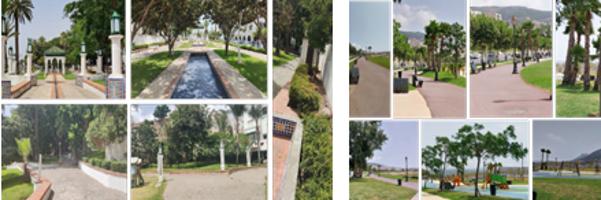
Faced with recurring drought and the overexploitation of water resources, the municipality of Tetouan (Morocco), with the support of the German city of Trier and the UrbA-CliMa project (Urban Adaptation to Climate Change in the Maghreb), conducted an in-depth study in order to design appropriate irrigation systems and identify alternative water sources to ensure the sustainable management of its urban green spaces.
Tags: Green spaces, water, climate change, Morocco, green infrastructure, irrigation, water resources, drought, sustainable management
Challenges addressed
- A drastic increase in water consumption for watering green spaces (from 12,655 m³ in 2015 to 46,750 m³ in 2020) due to urban expansion.
- Recurring droughts straining available water resources.
- Financial constraints hindering the implementation of new irrigation systems.
- Insufficient human resources in the green spaces department.
Main objectives
- Design watering systems tailored to each type of green space in Tetouan.
- Identify and harness alternative water resources (rainwater, treated wastewater, water from Martil River).
- Compile a comprehensive mapped inventory of green spaces.
- Develop a set of technical recommendations for effective and sustainable management of urban green spaces.
Facts
Project Type
Thd Design of appropriate irrigation systems and optimization of water resources
Partnership
Municipality of Tetouan (Morocco) | City of Trier (Germany) | Deutsche Gesellschaft für Internationale Zusammenarbeit (GIZ) – “City-to-City Cooperation Maghreb-Germany” regional project (KWT II) and UrbA-CliMa | Directorate General for Local Authorities (DGCT) | Engagement Global gGmbH / Service Agency Communities in One World (SKEW)
Funding
German Federal Ministry for Economic Cooperation and Development (BMZ)
Period
Tétouan -Trier Partnership: since 2016
KWT II: March 2020 – February 2024
UrbA-CliMa: March 2024 – February 2027
Location
Tetouan Urban Municipality, Tangier-Tetouan-Al Hoceima Region, Morocco
Scaling Up
Follow-up regional project “Urban Adaptation to Climate Change in the Maghreb” (March 2024 – February 2027)
Project description
Initially, a baseline assessment and needs diagnosis was carried out through a study combining desk research, map analysis and qualitative surveys.
The study produced a comprehensive inventory of the municipality’s green spaces and water resources, a detailed map, an analysis of the green infrastructure network, and the identification of plant species suited to local climate conditions.
Secondly, methodological and technical recommendations were set out in a guidebook of practical guidelines covering the design and sustainable management of urban green spaces, the use of alternative water resources (rainwater harvesting, wastewater treatment and reuse, and the use of spring water and water from the Martil River), as well as the introduction of low-water-demand plant species to complement the existing plant palette.
Finally, a layout plan for irrigation installations was proposed for each green space, specifying the type of equipment, the cost per square meter, the installation method and the budget breakdown. Throughout the project, around ten virtual exchanges, study visits and immersion internships were organized between Tetouan and Trier, focusing mainly on the rational management of water resources and irrigation methods suited to green spaces.
This project increases urban climate resilience by reducing water consumption, enhancing the quality of green spaces that serve as climate shelters during heatwaves, and improving air quality year-round.
Impact and results
Results achieved:
- Comprehensive assessment of existing green spaces and irrigation methods in Tetouan
- Specific fact sheets developed for each green space (type, water source, duration and water quantity, suitable systems)
- A guide containing methodological and technical recommendations regarding maintenance, irrigation, and the use of alternative resources
- Alternative water resources identified (stormwater, treated wastewater, water from the Martil River)
- Skills acquired by municipal teams in the maintenance and irrigation of green spaces
- Long-term: Goal of 100% irrigation of green spaces through the reuse of treated wastewater and the use of water from the Martil River
Lessons learned:
- Adapt irrigation methods to the type of vegetation in each green space to ensure even water distribution
- Establish a “mixed-source” water supply to reduce pressure on drinking water
- Enrich the existing plant palette with water-efficient species, without completely redesigning the landscape
- Make reducing water consumption a priority from the very beginning of the design process for any irrigation system
Sorry, no posts matched your criteria.