• EN
LogoLogoLogoLogo Logo
 
  • Home
  • About
  • Cases
  • Voices
  • Tools
  • Contact
  • Home
  • About
  • Cases
  • Voices
  • Tools
  • Contact
  • Home
  • About
  • Cases
  • Voices
  • Tools
  • Contact
  • Environment & Climate Change
  • Waste
  • Energy
    • Rev’ACTE
  • City Strategies & Governance
  • Economic Development
  • Urban Planning
  • Mobility
    • UTC
  • Innovation
    • ProcuraMED
  • Culture & Identity
  • Social Rights

Implementation of SUDS in Barcelona

Download full sheet
  • ENVIRONMENT & CLIMATE CHANGE |
  • WASTE |
  • ENERGY |
  • CITY STRATEGIES & GOVERNANCE |
  • ECONOMIC DEVELOPMENT |
  • URBAN PLANNING |
  • MOBILITY |
  • INNOVATION |
  • CULTURE & IDENTITY |
  • SOCIAL RIGHTS

ENVIRONMENT AND CLIMATE CHANGE
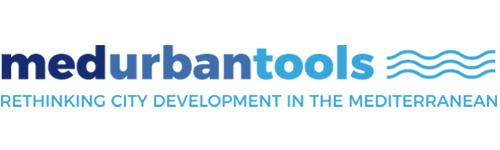

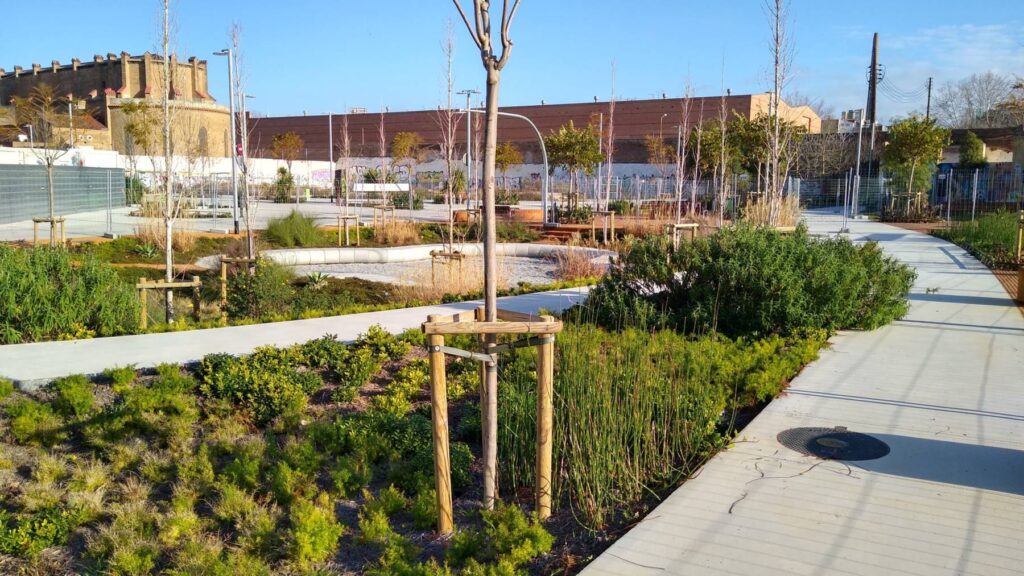
Sustainable Urban Drainage Systems (SUDS) are drainage solutions that provide an alternative to directly channeling surface water through networks of pipes and sewers to nearby watercourses. By mimicking natural drainage regimes, SUDS aims to reduce surface water flooding, improve water quality and enhance the amenity and biodiversity value of the environment. Suds achieve this by lowering flow rates, increasing water storage capacity and reducing pollution transport to the water environment. SUDS have been implemented in different projects in Barcelona since 2005.

Challenges addressed

• Integration with existing infrastructure: SUDS need to complement traditional drainage systems.
• Design, execution, and maintenance: There is a need to adopt the best available technologies and materials, while establishing clear methodologies for designing, implementing, and maintaining SUDS.

Main objectives

These systems have been used in Barcelona for over a decade and are complementary to conventional drainage, allowing for the natural flow behaviour of water to be replicated in urban areas by:
• Increasing concentration time: to extend the time it takes for surface water runoff to reach watercourses.
• Reducing flow rates: to minimize the speed at which runoff water enters drainage systems.
• Reducing volumes: to decrease the total volume of surface water runoff generated during rain events.
• Increasing infiltration: to enhance the ability of the soil to absorb and filter rainwater.
• Improving environmental quality: to enhance the overall quality of the urban environment.

External resources

Technical guide of Barcelona SUDS

From the City to the Ecosystem: Biodiversity in Barcelona’s Sustainable Drainage Systems

Barcelona’s urban drainage system by Barcelona Cicle de l’Aigua (BCASA) 

ASSET WATER- Science and Innovation 

Rescue- Resilience Atlas 

Urban Nature Atlas- Joan Raventós Park in Barcelona

Facts

Project type                                   Sustainable Urban Drainage Systems (SUDS)


Partners                                        Ajuntament de Barcelona


Beneficiaries                                Barcelona municipality and citizens


Dates                                             2005 – Ongoing


Website                                        Technical guide for design of sustainable and urban drainage systems

Project description

The change in precipitation patterns may lead to alterations in the water cycle and an increased risk of flooding due to inadequate drainage. This is why various actions, included in both the Climate Plan and the Climate Emergency Declaration of January 15, 2020, are outlined, which are in line with the 2030 Sustainable Development Goals agenda. One of the objectives is the creation of healthier and more sustainable cities.
The systematic implementation of Sustainable Urban Drainage Systems (SUDS) is one of the actions that can help naturalize cities and address climate emergencies. These systems comprise a wide range of solutions to manage stormwater from a different perspective than conventional methods, combining hydrological, environmental, and urban aspects.

They aim to promote the retention, treatment, and localized drainage of rainwater for return to the environment or direct use, without the need for energy consumption or large infrastructure, while harnessing natural processes in the water cycle management.
In designing SUDS as urban green spaces, it is essential to consider as many parameters as possible, meeting requirements related to universal accessibility, mobility, functionality, environmental quality, biodiversity, urban landscape, sustainability, and resilience.

Impact and results

• Flood risk reduction: by enhancing the city’s drainage capabilities, SUDS help to better manage rainwater, reducing the likelihood of urban flooding during heavy storms.
• Increase of the urban green spaces: these systems also contribute to the creation of green urban spaces, such as rain gardens and permeable pavements, which help improve air quality, enhance biodiversity, and contribute to a more sustainable urban environment.
• Greater efficiency in stormwater management and reduction of the urban heat island effect: essential in addressing rising temperatures and extreme weather events.

Publications & main documents
RELATED CONTENT
Istanbul Smart Mobility: Leveraging Public Procurement of Innovation to Manage Mobility in a Megacity
Cases, Innovation, Large city, Mobility, ProcuraMED, Public Procurement for Innovation, Shared mobility, Urban Planning
Éco-Cité Zenata (Morocco): Building a Sustainable City through Green Public Procurement
Cases, City Strategies & Governance, Economic Development, Green Public Procurement, Innovation, ProcuraMED, Urban Planning
NATURIncMed Methodological Guide: Participatory Urban Greening in Arab Cities
Environment & Climate Change, Tools, Urban Planning
Waste Management in Amioun (North Lebanon)
Cases, Environment & Climate Change, Waste,
Istanbul Smart Mobility: Leveraging Public Procurement of Innovation to Manage Mobility in a Megacity
Cases, Innovation, Large city, Mobility, ProcuraMED, Public Procurement for Innovation, Shared mobility, Urban Planning,
Éco-Cité Zenata (Morocco): Building a Sustainable City through Green Public Procurement
Cases, City Strategies & Governance, Economic Development, Green Public Procurement, Innovation, ProcuraMED, Urban Planning,
NATURIncMed Methodological Guide: Participatory Urban Greening in Arab Cities
Environment & Climate Change, Tools, Urban Planning,
Categories

CasesEnvironment & Climate ChangeUrban Planning

Tags
Biodiversity conservation environment and biodiversity Environment and Climate Change Flood prevention. green cities sustainable urban areas Sustainable Urban Drainage Systems Urban drainage Water Management
Share
  • Facebook
  • Twitter
  • Google+
  • LinkedIn

Legal mentions

contact@medcities.org


The Urban Transports' section is developed with the support of:

We value your privacy
We use cookies on our website to give you the most relevant experience by remembering your preferences and repeat visits. By clicking “Accept”, you consent to the use of ALL the cookies. However you may visit Cookie Settings to provide a controlled consent.
CustomizeReject AllAccept All
Manage consent

Privacy Overview

This website uses cookies to improve your experience while you navigate through the website. Out of these cookies, the cookies that are categorized as necessary are stored on your browser as they are essential for the working of basic functionalities of the website. We also use third-party cookies that help us analyze and understand how you use this website. These cookies will be stored in your browser only with your consent. You also have the option to opt-out of these cookies. But opting out of some of these cookies may have an effect on your browsing experience.
Necessary
Always Enabled
Necessary cookies are absolutely essential for the website to function properly. These cookies ensure basic functionalities and security features of the website, anonymously.
CookieDurationDescription
cookielawinfo-checkbox-analytics11 monthsThis cookie is set by GDPR Cookie Consent plugin. The cookie is used to store the user consent for the cookies in the category "Analytics".
cookielawinfo-checkbox-functional11 monthsThe cookie is set by GDPR cookie consent to record the user consent for the cookies in the category "Functional".
cookielawinfo-checkbox-necessary11 monthsThis cookie is set by GDPR Cookie Consent plugin. The cookies is used to store the user consent for the cookies in the category "Necessary".
cookielawinfo-checkbox-others11 monthsThis cookie is set by GDPR Cookie Consent plugin. The cookie is used to store the user consent for the cookies in the category "Other.
cookielawinfo-checkbox-performance11 monthsThis cookie is set by GDPR Cookie Consent plugin. The cookie is used to store the user consent for the cookies in the category "Performance".
viewed_cookie_policy11 monthsThe cookie is set by the GDPR Cookie Consent plugin and is used to store whether or not user has consented to the use of cookies. It does not store any personal data.
Functional
Functional cookies help to perform certain functionalities like sharing the content of the website on social media platforms, collect feedbacks, and other third-party features.
Performance
Performance cookies are used to understand and analyze the key performance indexes of the website which helps in delivering a better user experience for the visitors.
Analytics
Analytical cookies are used to understand how visitors interact with the website. These cookies help provide information on metrics the number of visitors, bounce rate, traffic source, etc.
Advertisement
Advertisement cookies are used to provide visitors with relevant ads and marketing campaigns. These cookies track visitors across websites and collect information to provide customized ads.
Others
Other uncategorized cookies are those that are being analyzed and have not been classified into a category as yet.
Reject All Save My Preferences Accept All
Powered by GDPR Cookie Compliance WebToffee Logo