ENVIRONMENT AND CLIMATE CHANGE

Al-Zohour Green Triangle: implementing NbS to collect water and prevent flooding
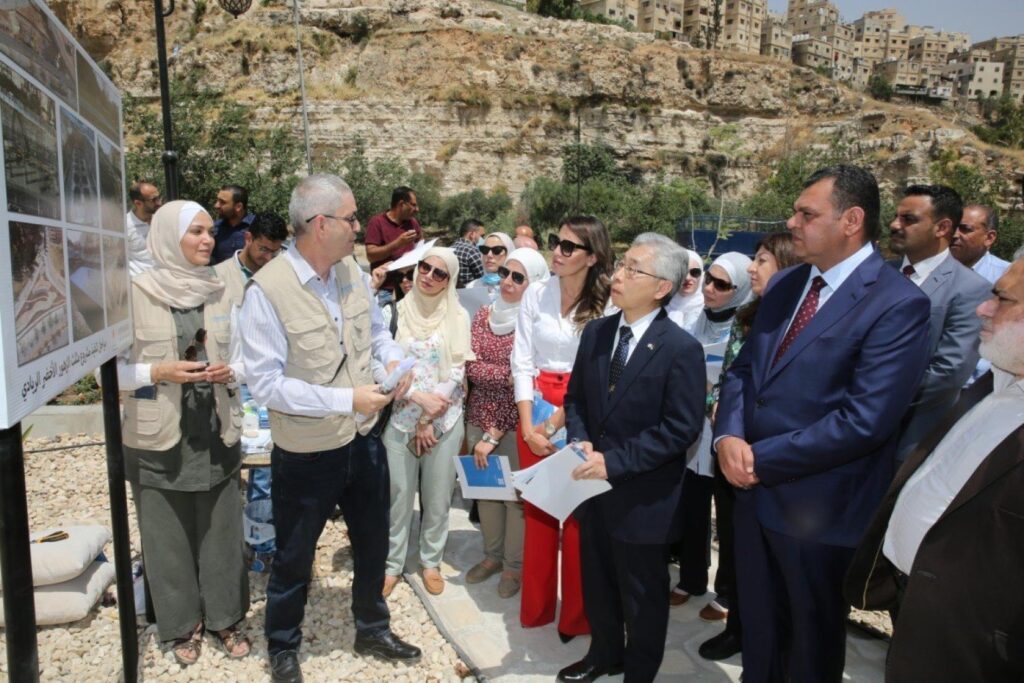
The Al-Zohour Green Triangle pilot project in Ras Al-Ain (Amman City, Jordan) is part of a larger initiative aimed at improving resilience against flash floods for vulnerable communities in Amman, including Syrian refugees. Funded by the Government of Japan and implemented with the Greater Amman Municipality (GAM) and UN-Habitat, the project focuses on using Sustainable Urban Drainage Systems (SUDS) to manage surface water runoff. It features bio-retention and rainwater detention techniques, including an underground rainwater storage tank with a capacity of 2,500 m³. This initiative is the first of its kind in Amman and aims to strengthen flood resilience while promoting green infrastructure for sustainable urban management.
Challenges addressed
• Effective flood management: Implementing sustainable urban drainage systems that can adequately handle surface runoff and reduce the risk of flooding in vulnerable communities.
• Integration of green infrastructure: Developing infrastructure that promotes local biodiversity while adapting to an urban environment, ensuring that stormwater management techniques also create healthy habitats.
• Adaptation to climate change: Planning and designing urban solutions that can adapt to extreme weather events, increasing the resilience of infrastructure in the face of the growing frequency of floods.
• Community participation: Promoting awareness and community involvement in the management and maintenance of green infrastructure, which is essential for the project’s success and the conservation of local biodiversity.
Main objectives
• Stormwater management: The project integrates two key techniques for handling stormwater—bioretention and detention systems.
• Flood mitigation: The project directly addresses the risks posed by flash floods in Amman by using sustainable infrastructure. It seeks to prevent flood damage by controlling surface runoff and providing a buffer before water flows into the stormwater network.
• Green infrastructure implementation: As part of a broader initiative for sustainable urban development, the project demonstrates the viability of green infrastructure in Amman, promoting both environmental benefits and community resilience.
• Replicability: Al-Zohour Green Triangle is designed to offer a model that can be replicated in other flood-prone areas of the city and across Jordan.
External resources
Facts
Project type Pilot project, Urban flooding strategy.
Partners Greater Amman Municipality, UN-Habitat Jordan, Government of Japan
Beneficiaries Vulnerable Jordanian Communities and Syrian Refugees in Amman
Dates 2021 – Ongoing
Website Al Zojour Triangle pilot project
Project description
Flash floods have become a serious problem in Jordan due to rapid unplanned urbanization, the insufficient capacity of drainage systems, and climate change ramifications. In 2018, flash floods resulted in the loss of lives and damage to private properties and urban infrastructure, especially in Amman. In response to the significant risk of flash floods in Amman, UN-Habitat Jordan has implemented the project “Strengthening the Social Stability and Resilience of Vulnerable Jordanian Communities and Syrian Refugees in Amman against Flash Floods”. The project, funded by the Government of Japan with a total budget of $978,000 and implemented in close collaboration with the Greater Amman Municipality (GAM), aimed to strengthen the government and community’s resilience and capacities to better manage flash floods. This was done through community consultations, awareness-raising campaigns, training, and capacity building on flash flood resilience, as well as through piloting flood mitigation measures that can be replicated in different areas using sustainable stormwater drainage systems and green infrastructure approaches.
As part of the project, UN-Habitat conducted a “Flood Risk Assessment and Flood Hazard Mapping” study of Downtown Amman, which identified flood hotspots within the city and proposed short, medium, and long-term solutions and interventions to mitigate the flood risk in Downtown Amman. The short-term solutions included the introduction of a series of stormwater retention and detention elements around the upstream areas of the city. Such elements would detain the fast-approaching flood water for some time before it drains down slowly, giving the drainage system in the downtown area enough time to pass the water through without causing harm or damage. This is called green stormwater infrastructure and is what the Al Zohour Green Triangle aims to demonstrate.
Impact and results
• Green infrastructure adoption: The project has demonstrated the value of green infrastructure with pilot initiatives like the Al Zohour Green Triangle and water harvesting systems.
• Wider community impact: The project directly benefits around 35,000 people in Downtown Amman, who will experience improved resilience against flash floods.
• Improved flood management: By implementing Sustainable Urban Drainage Systems (SUDS), the project helps mitigate flood risks through stormwater bioretention and detention systems, significantly improving the city’s ability to manage flash floods.
Publications & main documents
RELATED CONTENT
Sorry, no posts matched your criteria.