WASTE


Milan, one of the best examples in the world for food waste collection
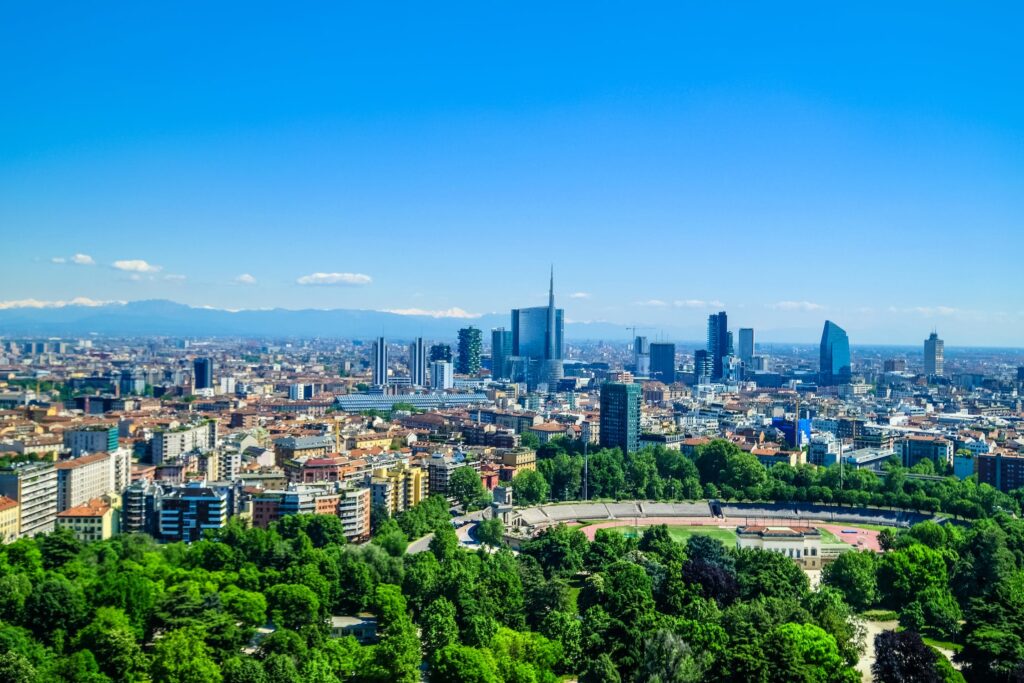
In 2011, the city of Milan, with a population of 1.4 million, took the decision to improve its waste management strategy by taking a holistic approach to separately collecting food waste.
Ten years later, after the first phase of implementation which began in 2012, the city is one of the best examples in the world for the collection of food waste.
Tags: Collection of waste, food waste, biogas, compost
Challenges addressed
- Implement a food waste collection strategy for a city of 1.4 million inhabitants
Main objectives
- Improve the collection rate of food waste
- Improve the overall selective sorting rate
Facts
Project type Waste management
Partnership
Municipality of Milan and AMSA
Funding
AMSA
Project description
After the 2011 municipal elections in Italy, the new government decided to adopt an ambitious separate collection scheme for the Milan area, with a specific focus on organic waste. At that time, Milan was collecting 28 kilograms of food waste per inhabitant.
Milan’s new food waste collection system first started with the design of a comprehensive plan, spearheaded by an ordinance from the mayor but also including key logistical details for collection, a communication campaign for citizens and the delivery of kits – bins, bags and instructions – to households and businesses. Two pilots were organised in small areas of the city in 2008 and 2010. During that phase, workers were trained to collect food waste but also to teach citizens about the new collection stream. AMSA, the waste management company, then began the first roll-out phase in November 2012. Over the next two years, the system was progressively implemented throughout the whole city – divided in 4 quadrants of around 300,000 inhabitants each. For each quadrant, a period of 6 months was foreseen with the last implementation phase ending in June 2014.
This collection system was implemented for 3 main categories, each of them having specific collection features:
- Commercial activities such as canteens, bars and restaurant: For these activities, which corresponds to around 25% of the total food waste that is collected within the city, the following criterias have been implemented: Door-to-door collection; the provision of 120 liter bins; daily collection from Monday to Sunday at night.
- Households: food waste from households is the biggest part of collected food waste in Milan. To implement separate collection for this stream across the whole city, the following policies have been implemented: Curbside collection from households; the provision of either 120, 35 or 10 liter bins and compostable bags, to put in the bin. The smaller bins/bags are available on request for single houses; collection twice a week in the early morning.
- Food waste fraction in open markets: For open markets, the following criterias have been implemented: Special compostable bags with a bag holder; Collection everytime the market ends.
Once the food waste is sorted and put in the proper bin, it is visually inspected by AMSA collection staff. If the inspection shows no sorting mistakes, the bags are then loaded onto the trucks and transferred to one of the two transfer stations in Milan before being sent to the treatment plant. The plant is designed to treat 200,000 tons of food waste per year, with the potential of producing 16.000.000 m³ of biomethane and 40,000 tons of compost a year. The biogas produced can be used for AMSA vehicles, a fraction of the compost produced is distributed free of charge to households and farmers to promote its use while the rest is sold.
However, even after the initial roll-out, active and constant education has remained necessary to maintain and improve the sorting habit. Therefore, AMSA’s first communication campaign has been complemented with the following tools: A free smartphone app PULIamo that provides an explanation and further details about food waste separate collection;
- A website where all the information and recent updates can be found. As Milan is a multicultural city, this information can be found in 10 different languages;
- The addition of the circular aspect of food waste in Milan in educational school programs;
- A 24/7 customer center that receives around 380,000 calls a year about the overall waste collection system.
Information sources : https://zerowastecities.eu/wp-content/uploads/2021/12/Milan-Case-Study_FR-1.pdf
Impact and results
- In 2019, the amount of food waste collected per capita was 110 kg, a figure almost 6 times higher than the EU average.
- An average of 130,000 tonnes of food waste per year has been transformed into biogas and compost in recent years.
- The overall separate collection rate reached 62.6% in 2020, one of the highest rates in Europe for such a densely populated city. The collection of food waste has had an impact on the overall waste management system.
- This new system has made it possible to avoid the emission of around 9,000 tonnes of CO2 per year.
- By turning food waste into biogas and compost rather than disposing of it, the city of Milan was able to save around €282,000 in waste treatment in 2019.
RELATED CONTENT