Cases, urban gender planning, women, social cohesion, social rights, equality, gender-responsive, Nablus


City-wide public space assessment toolkit: the case of Nablus, Palestine
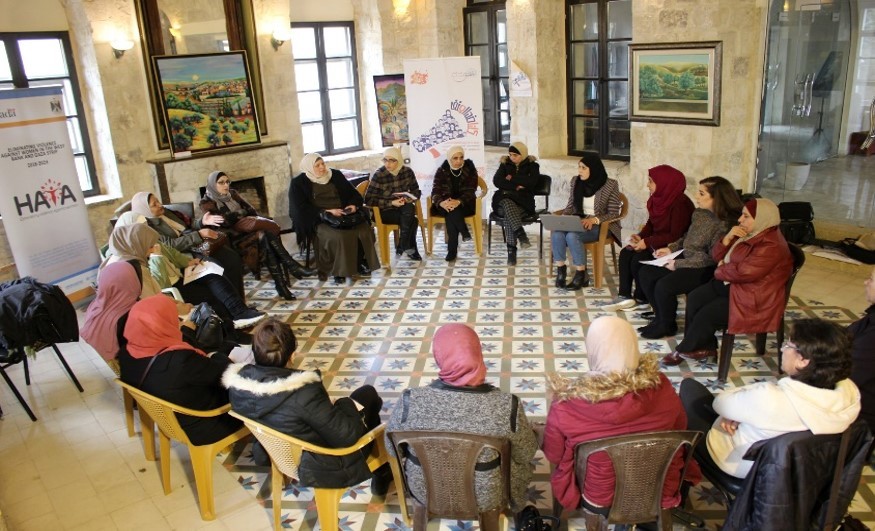
The city-wide public space assessments in Palestine are prepared to provide verifiable data on women’s experiences in public spaces. The assessments are conducted in five (5) urban areas, namely: Jenin, Nablus, Jericho, Bethlehem cluster in the West Bank and Khan Younis in Gaza Strip. The assessments have utilized UN-Habitat’s city-wide public space assessment toolkit and adopted an active participatory approach with high engagement of the targeted municipalities.
Tags: Urban planning, public services, Mersin, women, development, social inclusion, gender inclusion, urban gender planning, civil society
Challenges addressed
The purpose of this toolkit is to guide cities when conducting a city-wide public space assessment. It illustrates the steps that should be followed within the process to ensure that the public space assessment meets the objectives of the city. By applying this tool, cities can understand the state of their public spaces, specifically the network, distribution, accessibility, quantity and quality of their public spaces. This will support the development of a comprehensive evidence-based public space strategy or policy.
Main objectives
To provides a flexible framework designed to aid local governments and partners working in public spaces to assess public spaces and develop a prioritized set of interventions
The inventory and assessment of Open Public Spaces in Nablus City was carried out with the aim that: The results of the assessment will inform strategic and policy recommendations, particularly to improve safety and security, accessibility and inclusion for women and girls.
Facts
| Project type | Urban planning and focused on public spaces and community participation |
| Partnership |
Nablus Municipality, local community, ministry of local government. |
| Funding | UN Habitat |
Project description
The city-wide public space assessments guide provides a flexible framework designed to aid local governments and partners working in public spaces to assess public spaces and develop a prioritized set of interventions – both spatial and non-spatial– that government and private entities can take to address them. The process has been divided into four parts that are progressive with outputs that are as important as the process and social inclusion and human rights being considered at all stages of the process. To ensure that recommendations are implementable, the regulatory framework, urban planning instruments, financing structure and institutional set-up are considered in the process. The tool is also key to monitor and achieve the public space commitments within the New Urban Agenda and the Agenda 2030.
The tool takes a participatory approach that aims to determine priority areas and sectors of intervention – both spatial and non-spatial– that government and private entities can take to address them. Since 2015, UN-Habitat has been supporting cities to map and assess their public spaces. It has done this through working directly with the local government, research institutes and other partners
Case study: Eliminating Violence against Women and Girls in Palestine
To support the “HAYA” Programme “Eliminating Violence Against Women in the West Bank and Gaza Strip”, UN-Habitat in collaboration with Ministry of Local Government and the private sector conducted city-wide public space safety audits in five cities in Palestine: Khan Younis, Jenin, Nablus, Jericho and Bethlehem. The aim was to understand women’s and girls’ safety concerns in public spaces and to develop city-level public space strategies that will feed into the national public space policy development process. The assessment focused on 6 areas: social problems, infrastructural problems, anti-social behavior, harassment, perception of unsafety and experiences of crime and harassment.
The most common safety concerns by women and girls in public spaces in the West Bank and Gaza Strip are infrastructure problems, perception of unsafety, social problems and experiences of crime and harassment in public spaces. Approximately 27 per cent of the public spaces in the West Bank and Gaza Strip have infrastructural problems these are poor or lack of street lighting, poor roads, lack of traffic calming measures and overall lack of gender-responsive designs. Users of public spaces feel unsafe in 25 percent of the public spaces in West Bank, this number increases to 49.3 per cent in Gaza Strip while in both areas, women and girls felt more unsafe compared to men. Social problems such as robbery, prostitution, illegal dumping, vandalism, mugging, theft, murder, and violence were another safety concern observed in 15 per cent of the public spaces in West Bank and in 13.2 per cent of public spaces in Gaza Strip. In Gaza strip, users in 14.7 per cent of public spaces reported experiencing some forms of crime and harassment with the main ones being sexual abuse and robbery while in the West Bank experiences of crime and harassment were found in 7.2 per cent of public spaces with mugging and car-jacking being the most prevalent. Harassment is witnessed in 10 per cent of public spaces in the West Bank but only 3 per cent in Gaza Strip, these include verbal abuse, ogling, physical abuse, following and stalking
In the case of Nablus, the objectives of the assessment were:
- Investigate the Accessibility of the public spaces in the Municipality.
- Understand the Distribution of the public spaces in the Municipality.
- Understand the Network of the public spaces in the Municipality.
- Assess the Quality of the public spaces in the Municipality (Accessibility,
- Use, Comfort, Facilities, Safety, and Green Coverage).
- Establish the share of urban land that is used as open public spaces in Municipality.
UN-Habitat team in collaboration with the Ministry of Local Government (MoLG) developed a structured questionnaire to guide the classification and analysis of the existing open public spaces. The questionnaire was then uploaded into Kobo toolbox application that is an open source and digital and allow for validation on the ground, remote administration, and working under different conditions. In collaboration with Municipalities the first version of base map was prepared, including several GIS layers such as: administrative boarders, existing open public spaces, main streets, public facilities, land use, and neighbourhood boundaries.
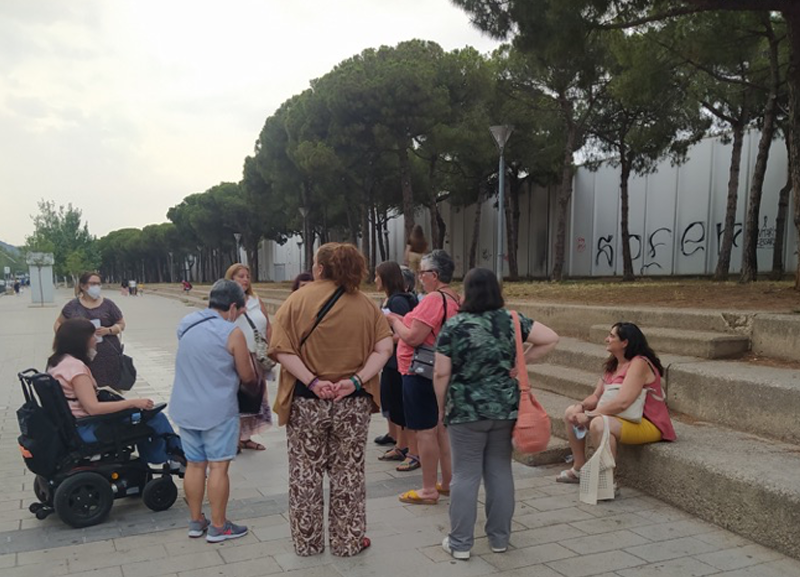
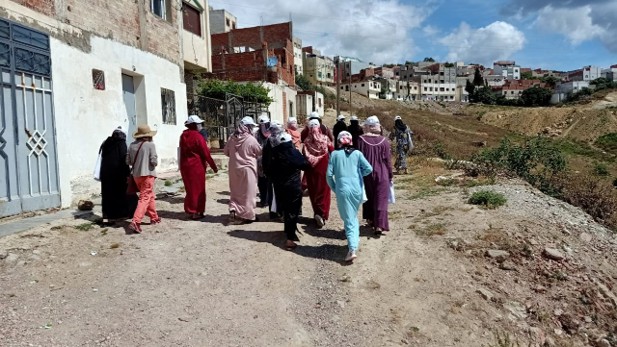
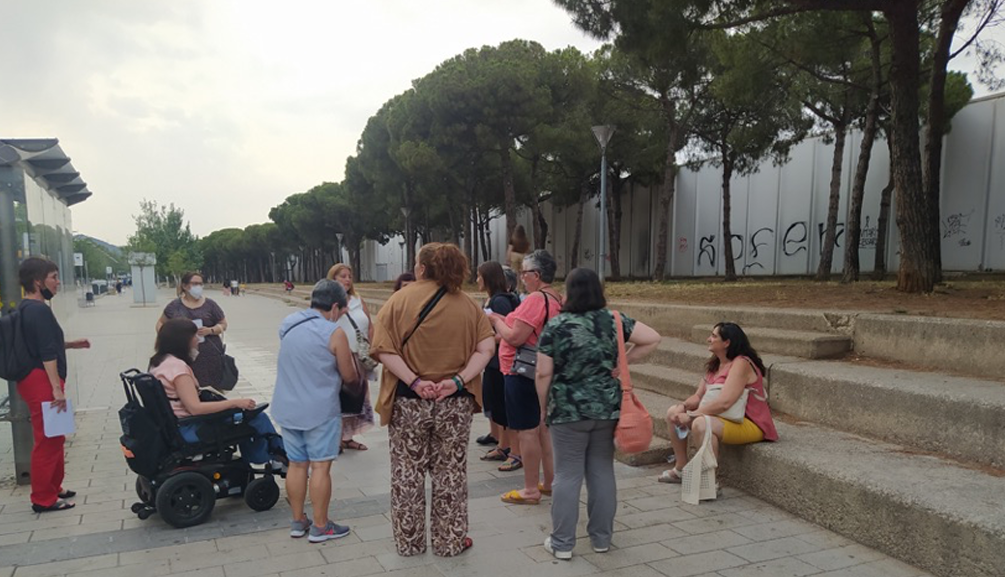
Through a vigorous exercise, the municipality conducted city-wide public space assessments, with a specific focus on providing safe, inclusive and accessible public space for women and girls, especially in the most disadvantaged communities. The municipality was responsible to lead and facilitate the safety audit survey in Nablus City and to discuss and present the findings from the assessment to the key stakeholders.
The team conducted data collection in Nablus City. The questionnaire used included different methods to harness data required for reliable assessment of public spaces:
A) Observations: data related to the physical components of public spaces, and number of users were injected based on the surveyor’s observations in the field;
B) Photos: minimum of three photos were mandatory to finalize the form, the photos were very helpful for assessing the nature of the public space and to verify its respective data as well;
C) Sound Measurement: the surveyors were able to reflect the noise levels through voice recording tab that is an indication of comfort level of the public space;
D) Semi-Structured Interviews: to assess the safety from the users’ perspectives, the surveyors conducted a number of interviews for each entry, people living adjacent to the targeted public spaces were interviewed when the public spaces were vacant during the field visits. Children were also interviewed regarding their perception of safety
To facilitate the fieldwork and make sure that the generated data from the field are appropriately linked with spatial data (GIS base map), each team member received assigned public spaces ID and name. In addition, each team was given aerial map of the neighbourhoods that include the targeted public spaces.
The total number of cleared and verified open public spaces in Nablus City was 61.
Charts were used to present the results. Information gained by documents and maps analysis and observations were compared with the real situation and interviews.
Impact and results
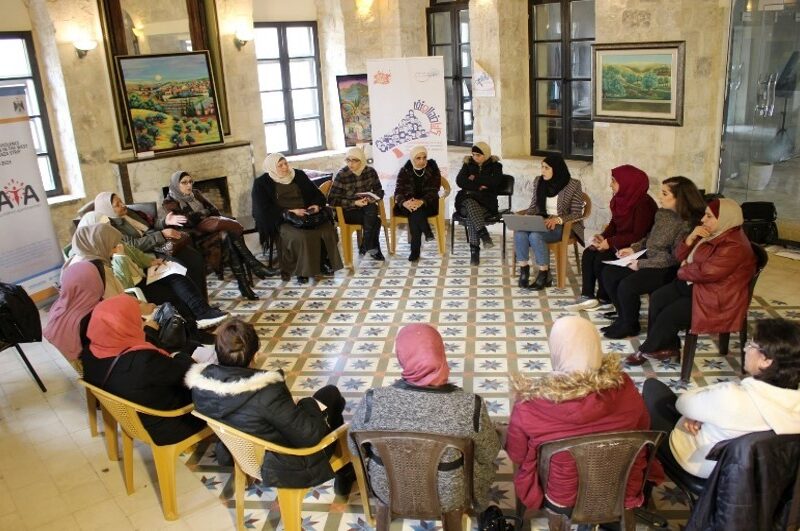
To present the results of the city-wide public space assessment, an e-validation workshop was held with the participation of active members of the local community including women associations, journalists, local NGOs, International NGOs, handicapped related associations, Ministry of Education, and youth activists; in addition to UN-Habitat, Nablus municipality, and representatives of local universities
Recommendations from the Validation workshop:
- Improve street infrastructure including pavements, street lighting and furniture.
- Improve the efficiency of public spaces to host more than one activity and a wide range of users in a day.
- Improve street connectivity outside of the city center.
- Increase the soft landscape within public spaces in the city and improving its green index.
- Improving the management mechanisms to maintain the cleanliness of public spaces.
- Improve the safety index (eg.. through the presence of security guards in public spaces to avoid robbery and vandalism in public spaces).
- Improve the availability and quality of physical infrastructure in public spaces.
- Adopt a planning methodology and guidelines as a reference on how to design, implement and maintain safe and inclusive public spaces.
- Provide public car parking areas.
- Launch an awareness campaign on the importance and mechanisms of having safe and inclusive public spaces in the city of Nablus.