Cases, urban gender planning, women, social cohesion, social rights


Women Friendly Cities in Türkiye – The case of Mersin
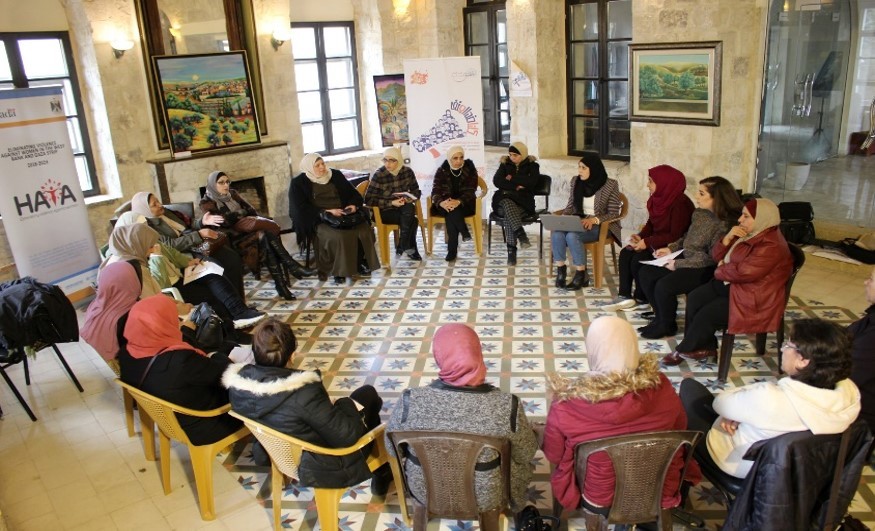
Working in collaboration with local governments, public institutions, civil society organizations, and city residents, the programme aims to create urban environments where everyone – especially women and girls – can live safely, enjoy equal rights, access essential services without any barriers, and participate fully in public life.
Tags: Urban planning, public services, Mersin, women, development, social inclusion, gender inclusion, urban gender planning, civil society
Challenges addressed
Nearly 4 in 10 women in Türkiye have been subjected to physical or sexual violence in their lifetime – though only about 1 in 10 reported seeking help from an institution. A survey by the Turkish Statistical Institute found that more than one-third of women felt unsafe walking home alone at night, compared to 15 per cent of men. Poorly planned infrastructure, such as unlit streets or inadequate public transportation, can inadvertently restrict women’s freedom of movement or expose them to risks.
Main objectives
- Everyone, especially women, girls, and vulnerable groups, has equal, safe, and barrier-free access to fundamental rights and services, including infrastructure, transportation, gender-responsive budgeting, employment, social services, health, and education.
- Women can participate effectively in urban planning, programming, budgeting, decision-making, implementation, monitoring and evaluation processes.
- Women can live free from discrimination and all forms of violence in cities that empower them and ensure equality between women and men in every sphere of life.
Facts
| Project type | Designing safe public spaces free of violence against women |
| Partnership |
The “Women-Friendly Cities” programme was first launched in 2006. It is co-funded by the European Union and implemented by UNFPA in partnership with the Union of Municipalities of Türkiye (UMT) |
| Start date | 2024 |
| Funding |
UNFPA and European Union |
Project description
The 3rd phase of the Programme began at the end of 2024 under the coordination of the Directorate for EU Affairs, the Ministry of Foreign Affairs of the Republic of Türkiye, being implemented by the United Nations Population Fund (UNFPA), in partnership with the Union of Municipalities of Türkiye (UMT), with the financial support of the European Union. In this phase, 25 municipalities across Türkiye, together with numerous civil society organizations active in these cities, will jointly steer processes of participatory local governance, equality-oriented service delivery, and institutional transformation.
Within this context, in line with the principles of social and environmental sustainability, the Programme aims to promote a rights-based, inclusive, and participatory approach to local governance, through multi-stakeholder collaboration among municipalities, public institutions, civil society organizations, academia, and city residents. For this purpose, WFC CSO Groups are established to actively support municipalities throughout all programme activities in promoting equality between women & men at the local level.
25 municipalities included in Phase III of the Women-Friendly Cities Programme: Adana, Adıyaman, Ankara, Antalya, Aydın, Balıkesir, Bursa, Denizli, Diyarbakır, Edirne, Erzurum, Eskişehir, Giresun, İstanbul, İzmir, Kars, Manisa, Mersin, Muğla, Muş, Nevşehir, Niğde, Ordu, Şanlıurfa, Tekirdağ
A multi-faceted, multistakeholder programme of activities has been planned, tailored to the different roles and needs of all programme partners throughout the three years.
- Capacity Development and Technical Support: A Women-Friendly Cities Training Programme developed by UNFPA, and delivered in 25 cities through both online and in-person modules for municipal and CSO representatives. Continuous technical support provided to local governments and CSOs throughout the programme.
- Proliferating Local Equality Mechanisms: Local Equality Units, Equality Commissions, and Equality Boards established in partner municipalities. Local Equality Action Plans (LEAPs) developed and technical guidance and implementation support provided to both municipalities and CSOs throughout these processes
- Project Development and Implementation: CSOs supported with technical guidance to design projects for the implementation of LEAPs. Selected projects receive in-kind support and are implemented in collaboration with municipalities.
- Experience Sharing and Joint Learning: Regional conferences and workshops organized to facilitate the sharing of good practices, challenges, and solutions among municipalities and CSOs.
- Policy Development: Throughout the programme, an Implementation Handbook and Checklist, as well as Monitoring & Evaluation Guidelines, are developed. At the end of the programme, a Women-Friendly Cities Policy Paper will be produced.
Impact and results
Participating municipalities have placed a strong emphasis on improving their ability to prevent and respond to cases of gender-based violence.
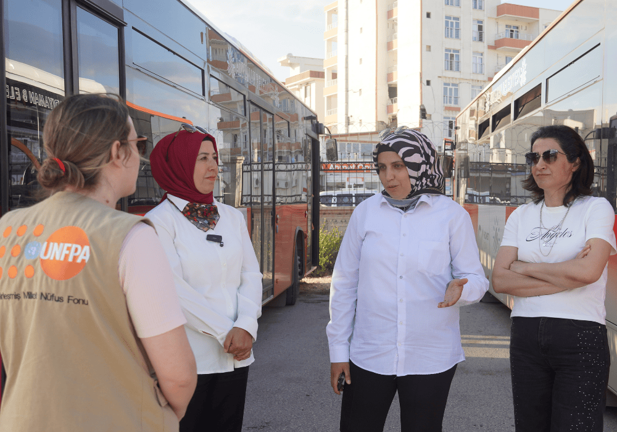
In particular, cities like Mersin have focused on improving public infrastructure through expanded street lighting, safe transportation routes and security camera systems to promote a sense of safety that is critical for women to participate in public life.
The Women-Friendly Cities programme also encourages public spaces to be made more accessible so that women with disabilities are not socially or economically excluded. In the southern port city of Mersin, for example, specialized units have been set up at bus terminals, where women often go when fleeing abusive home situations.