Cases, International Relations and Cooperation, strategic planning

Internationalization Plan of the Barcelona Metropolitan Area2021-2025
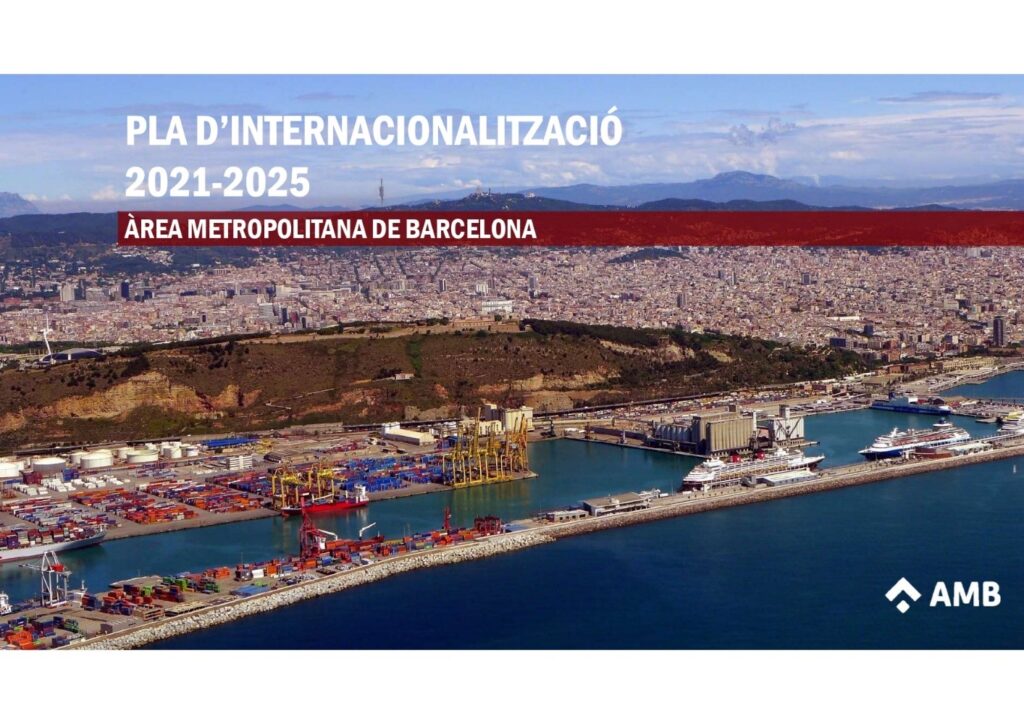
The Internationalization Plan of the AMB for the period 2021-2025 aims to establish the international strategy for the institution as a whole, promote the metropolitan dimension, promote the raising of funding for strategic projects and facilitate cooperation, innovation and knowledge transfer.
This is one of the first internationalization plans carried out by a metropolitan entity worldwide. The Plan was approved by the Metropolitan Council on July 27, 2021. The Plan was presented after a consultation process in which over 30 interviews and meetings were held with about a hundred institutions of the metropolis and abroad: local councils, public and private metropolitan bodies, research centres, think tanks, international networks, technical services of the AMB, etc.
The Plan materialises the Metropolitan Action Plan (PAM) 2019-2023, which aims to boost the AMB’s projection abroad in line with the 2030 Agenda and the sustainable development goals (SDGs), the New Urban Agenda (Habitat III), the Paris Agreement on climate change, the European Green Deal, the Leipzig Charter, the Pact of Amsterdam and the defence of human rights, among others.
Tags: International relations, international strategy, International cooperation, international metropolitan plan, internationalization
Challenges addressed
The AMB Internationalisation Plan 2021-2025 takes on the challenges of the entire institution and its territory. Through this plan, AMB aims to provide support and solutions using a structured and shared strategy. Key challenges addressed by the plan include:
a) Advancing Sustainable Policies: Aligning and integrating sustainable practices across key sectors such as transport, mobility, housing, energy and water and waste management, in line with global climate and environmental goals.
b) Fostering innovation and digital transition: Promoting the adoption of cutting-edge technologies and driving digital transformation within metropolitan services to enhance efficiency and quality.
c) Strengthening economic projection: Developing strategies to internationally promote the metropolitan area unique assets, attract investments, and stimulate socio-economic growth.
d) Enhancing Social and Territorial Cohesion: Focusing on improving social inclusion and achieving balanced territorial development to reduce disparities within the metropolitan area.
e) Transforming Productive Models: Supporting the transition towards innovative, competitive, and sustainable economic models to foster resilience and adaptability in the local economy.
f) Influencing European and International Agendas: Aiming to project AMB’s interests on European and global agendas, ensuring that metropolitan needs and priorities are reflected in international policies and programmes.
g) Securing International Funding: Targeting the acquisition of international funds for transformational projects, utilizing opportunities to drive local development initiatives.
h) Expanding Knowledge Management: Enhancing the exchange, capitalization, and application of knowledge through robust partnerships with local and international entities and networks to foster a culture of learning and innovation.
By addressing these challenges, the AMB Internationalisation Plan aims to position the metropolitan area as a leader in sustainable development, innovation, and economic and social development, while enhancing the quality of life for its residents.
Main objectives
The general objective of the Internationalisation Plan is to boost sustainability, competitiveness, the innovation dimension, the quality and effectiveness of policies promoted by the AMB and project its assets. This general objective will be deployed through three specific targets:
- a) Impact European and international political agendas to promote the interests, needs, and expectations of the AMB and the metropolitan territory.
- b) Help to transform the productive model and the social and territorial cohesion of the metropolis of Barcelona.
- c) Project the AMB as an innovative public administration, focused on knowledge, based on values, and open to the world.
Facts
Project type Strategic planning, Internationalization
Partnership
The strategic lines are deployed in collaboration with the following partners:
Coordination with metropolitan councils
Working with metropolitan councils is an integral part of AMB’s character, both internally and internationally. A significant portion of the strategic lines outlined in this Plan are implemented in collaboration with municipalities.
Bilateral relations with other metropolitan areas
In recent years, AMB has established strong bilateral connections with other European metropolises and regions around the world, allowing for the sharing of specific strategies and initiatives.
International networks of cities and metropolitan areas
International networks of cities are one of the main instruments of international action. The AMB maintains a very active presence in some international networks that operate on a European and global scale. Specifically, this Plan aims to focus the institution’s presence in the following networks: Metropolis (and through it, with United Cities and Local Governments); European Metropolitan Authorities (EMA); MedCities; EIT-Urban Mobility; ICLEI; UITP and ACR+. At the same time, the adhesion to new networks will be analyzed.
Alliances with strategic partners
Promoting the strategic lines foreseen in this Plan also requires the construction of alliances with other public and private operators. From multilateral organizations such as UN-Habitat, the OECD, or the European Union, through research centers, think tanks, universities, companies, and business organizations, to civil society organizations.
Funding The plan itself does not have an associated budget
Start date 2021-2025
Website
Project description
The Plan pivots on the institution’s competences, assigned by the Act 31/2010 of the Parliament of Catalonia: territory, sustainable transport and mobility, ecology, housing, and economic and social development, as well as other areas not included within the legal framework, but still having a strong metropolitan component: digital and technological transition, tourism, culture and creation, sustainable food policies and the promotion of health as a cross-cutting policy, among others.
The plan sets five strategic lines At the same time, these lines are structured into actions and specific expected results.
- Impact the EU’s political agenda and the system of the United Nations. This task is developed through the following networks: European Metropolitan Authorities (EMA), Metropolis, United Cities and Local Governments (UCLG), MedCities, etc.
- Attract European and international funds with the desire to continue boosting transformational strategies in the AMB and metropolitan councils. The AMB has presented a very significant portfolio of metropolitan projects through the Next Generation EU.
- Innovation and knowledge management. The aim is to extend, capitalise and transfer knowledge in the metropolitan area, developed bidirectionally by both the AMB and other local and metropolitan governments from around the world.
- International economic projectionof the metropolitan territory as a whole. The goal is to define an international projection strategy, promoting elements of added value in strategic sectors in order to attract opportunities for the territory’s socio-economic development. This line of work is driven by the Economic Development Agency of the AMB.
- International cooperationthrough the International Cooperation Master Plan (2020-2023) approved by the AMB.
Geographical deployment around the world
Even thoughthe AMB’s international action has a global scope, different priorities and intensities are defined depending on the geographical area:
A) Europe. It continues to represent the central area for the institution and is the only geographical area where actions will be developed in each one of the Plan’s five strategic lines. The Plan places priority on alliances with Greater Manchester, Grand Lyon, Città Metropolitana di Milano, Città Metropolitana di Torino, Área Metropolitana do Porto, Metropolis GZM-Katowice. In addition, relationships with the metropolises of Amsterdam, Rotterdam, The Hague and Grand Pariswill be intensified.
B) Mediterranean and Latin America. They hold a place of importance and the Plan will work to strengthen ties with these territories. As regards the Mediterranean, the Plan targets priority relationships with Tunis, Métropole Aix-Marseille-Provence, Città Metropolitana di Roma, Tangier-Tetouan and Sfax. Furthermore, ties with the metropolises of Naples, Algiers, or Thessaloniki will be encouraged. With Latin America, priority is given to San Salvador, the Metropolitan Area of the Aburrá Valley, Montevideo, Mexico City, Guadalajara metropolitan area, Bogotá, and Santiago de Chile.
C) Asia, the United States, and Canada. The Plan intends to broaden relationships in these regions as they offer significant potential for the future, especially in the technology, scientific, and commercial fields. In relation to Asia, the Plan maintains priority relationships with Seoul and Guangzhou. With Canada, the Plan aims to consolidate relationships with Montreal and establish new ones with metropolises in the United States.
D) Africa. Relationships will mainly focus on the area of decentralized cooperation and bidirectional knowledge exchange. The Plan seeks to create strategic cooperation with Gauteng, Maputo, and Dakar.
Impact and results
To measure the results achieved and learn from them to enhance future public policies, the Plan is using a follow-up methodology to monitor and evaluate the implementation of its strategic directions and actions. The Plan’s progress will be periodically evaluated, with an interim assessment and a final one in 2025. However, the results of these evaluations have not been published yet.

Publications & main documents
MORE CONTENTS
Sorry, no posts matched your criteria.