Cases, environment and climate change

Socio-environmental recovery of Barcelona metropolitan river spaces
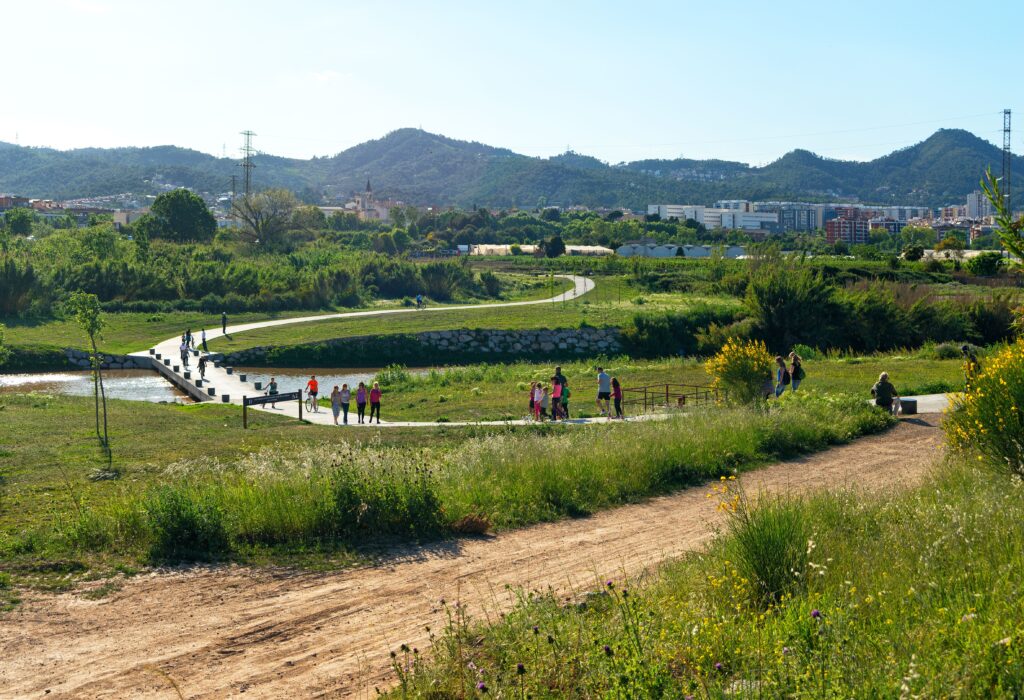
The project is focused on the environmental and social recovery of the metropolitan fluvial spaces of the Llobregat and Besòs rivers and their tributary streams, as well as landscape improvement and social connectivity actions in the Ripoll and Sec rivers, to enhance their role as green corridors within the metropolitan green infrastructure network.
Thus, intending to structure the territory through the development of projects of metropolitan scope and preserving natural and free spaces, the AMB develops actions to improve the fit of these fluvial spaces in the territorial matrix to enhance ecosystem services and preserve and improve their ecological and landscape values.
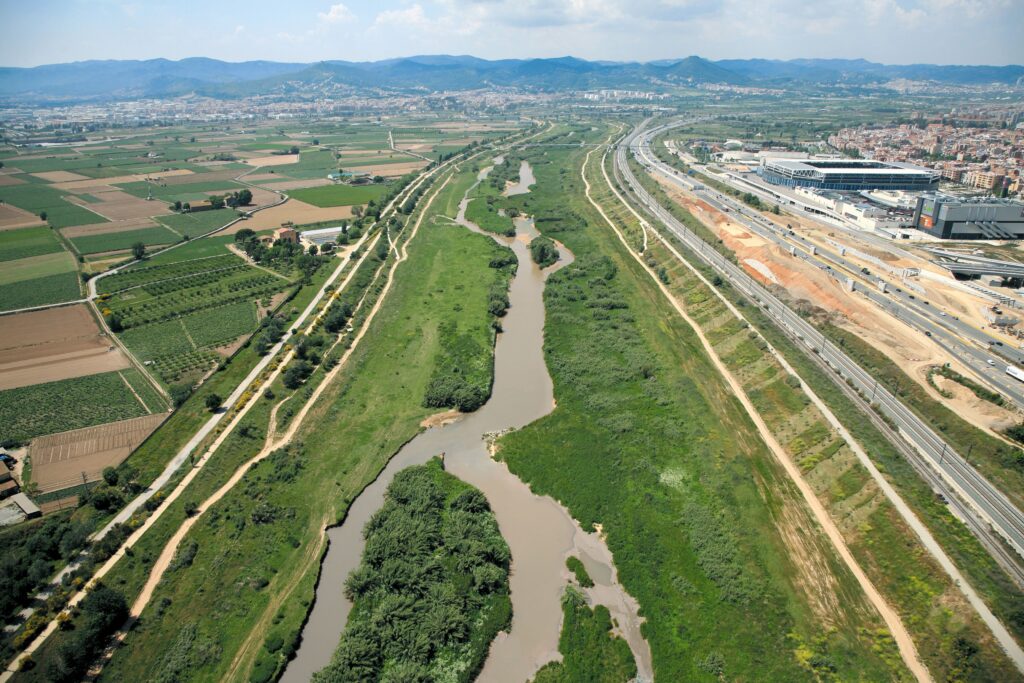
The actions focus on the improvement of the hydrological network and the environmental and social recovery through the reintegration of these spaces in the geography of metropolitan cities, the improvement of resilience and adaptation to the effects of climate change, while incorporating measures to curb the climate emergency.
Tags: Rivers, NBS, Ecosystem services, Water management, Climate resilience
Challenges addressed
Metropolitan fluvial spaces are of great environmental value but present a high degree of artificiality and great anthropic pressure due to their metropolitan context. This pressure results in degradation, ecological and social isolation, and biodiversity loss. Thus, the main challenges are focused on reversing these problems. This involves the management of these complex spaces where infrastructure, services, natural spaces, and leisure activities coexist. It’s, on the one hand, to make the existence of infrastructures and services compatible with the improvement of natural, landscape, and social values. On the other hand, promote social use in balance with the environmental values of metropolitan river spaces and the rest of the functionality of the territory, such as agricultural activity in the case of the Llobregat River.
Main objectives
- The main objective is to guarantee the environmental functions of the metropolitan river spaces and the appropriation by the citizens as spaces with natural, heritage and recreational value. To achieve this goal, it is necessary to guarantee the biodiversity and the functioning of the ecological processes of river spaces, regulate disturbances and maximize their potential as providers of multiple ecosystem services. The reinforcement of the interconnection of river spaces with the rest of the green infrastructure is also considered very important. Finally, the coordination between the different agents of the territory to establish synergies and common strategies is another very relevant aspect.
Facts
Project type River ecosystems recovery
Partnership Barcelona Metropolitan Area (AMB) (OTG) and related Municipalities
Funding €24,500,000 (Spanish Ministry, Generalitat of Catalonia, AMB and European Funds)
€37,000,000 (calls PSG1 & PSG2: Municipalities, AMB and European Funds)
Start date Rivers socio-environmental recovery 2006 – ongoing. PSG 2015 – ongoing
Website https://www.amb.cat/es/web/territori/espais-fluvials
https://memoria2023.amb.cat/es/territori/espais-fluvials
Project description
The AMB has a great track record in the social and environmental recovery of metropolitan river spaces. In the case of the Llobregat river, the AMB has coordinated and acted in the recovery process of this river space through the Consortium for the Recovery and Conservation of the Llobregat River (2006 – 2013). In the case of the Besòs river, the recovery has been driven by the town councils and the AMB.
From the year 2015, the program that carries out the actions in metropolitan fluvial spaces is the Program of Actions in Natural and Urban Landscapes (PSG). The AMB has designed, tendered, and executed all these actions, and many have been carried out with municipal and European co-financing and with the determined involvement of town councils in management. This has enabled a continuous improvement and evolution of these actions over time and great profitability in ecological and social terms.
In parallel, the AMB is working on the definition of the Llobregat river model, with a comprehensive and systemic vision, from planning, through design and implementation, to the management and maintenance of this metropolitan green corridor. Within this framework, the development of in-depth studies on the ecological connectivity, biodiversity and vegetation of the Llobregat River stand out, as well as the definition of guidelines for future actions in this Llobregat area.
In addition, similarly to other key areas of the metropolitan green infrastructure, such as the beaches and the network of metropolitan parks, the AMB monitors the use of the Llobregat River. The study is part of the socio-environmental recovery of the Llobregat river and has the support of the Metròpoli Institute and the metropolitan municipalities in the area of the river. This is a line of work that started in 2018 and that must have continuity in the coming years.
In terms of maintenance, the AMB has been involved in the management of the Llobregat River area since 2006 through the maintenance of actions carried out with sustainability criteria and focused on the self-regeneration of the vegetation. These actions are completed with actions to raise awareness among citizens through the publication of publications and didactic materials, and also with the organization, in collaboration with the municipalities, of educational and environmental enjoyment activities.
Finally, the Green Infrastructure Service of the OTG, with the support of the International and Cooperation Area of the AMB, has been directly managing international projects in the area of the Llobregat River, which has generated knowledge and will contribute to the definition of the river model that is to be promoted.
Impact and results
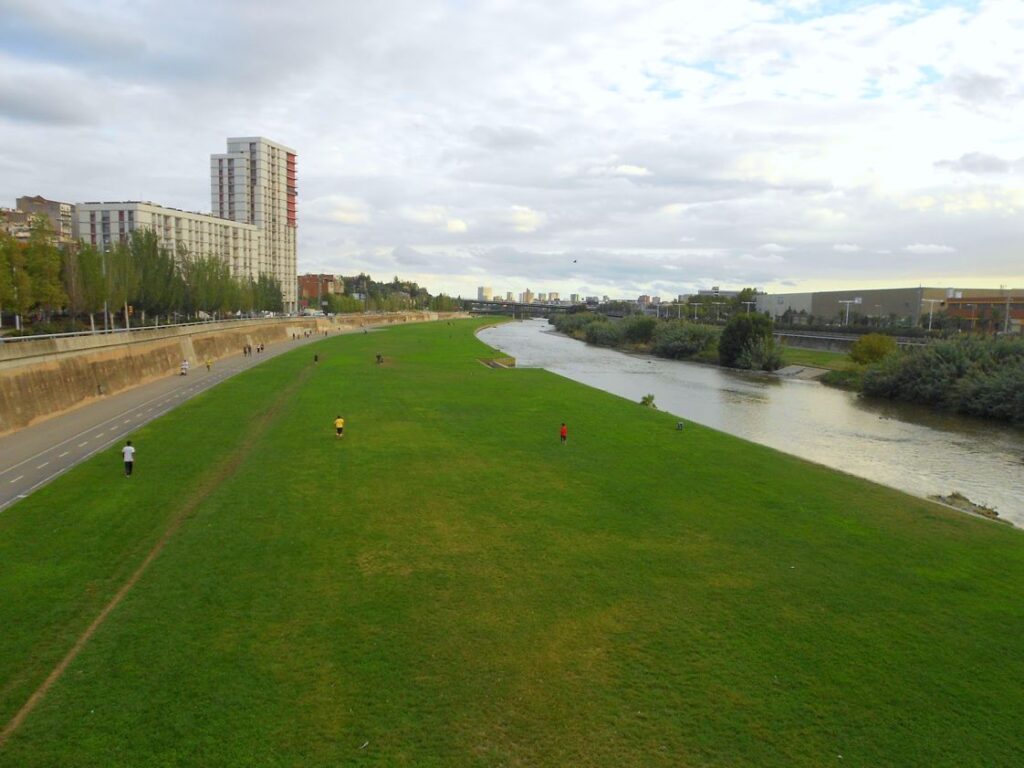
- 2.5 million visits to the Llobregat River
- More than 65 km of paths arranged for social use in Llobregat, 10.8 km in the Besòs metropolitan river area and 9.2 km in Ripoll
- Cooperation with 16 municipalities in the Llobregat metropolitan river area, 4 in Besòs and 3 in Ripoll.
- 2 steps to cross the Llobregat river, 1 step in the Ripoll river and one step in the Sec river and an elevated footbridge in Barberà del Vallès
- More than 1,100 species of fauna and more than 1,800 of flora
- Close to 362 hectares of managed fluvial space, of which 50 hectares correspond to the maintenance of paths and recreation area
Publications & main documents
- Leaflet publication Environmental and social impact of solutions based on nature (SBN) in the Llobregat river
- Publication Study of ecological connectivity in the metropolitan area of the Llobregat River. Executive Summary
- Publication Study on the analysis of biodiversity in the metropolitan area of the Llobregat River. Executive Summary
- Survey on social use in the metropolitan area of the Llobregat River
- (video) Molins de Rei river path
More contents
Sorry, no posts matched your criteria.


